Tag Archives: heart healthy diet

Easy Heart-Healthy Recipes for Seniors: Simple Meals and Snacks for a Healthy Heart

Easy Heart-Healthy Recipes for Seniors: Simple Meals and Snacks for a Healthy Heart

Last updated: September 30, 2026

Quick Answer

Easy heart-healthy recipes for seniors focus on whole grains, lean proteins, healthy fats, and low sodium, typically 140 mg or less per serving. Simple preparations like slow-cooker soups, grilled fish with vegetables, oatmeal with fruit, and one-pan sheet meals reduce active cooking time while supporting cardiovascular health. Most recipes take 30 minutes or less and use familiar ingredients available at any grocery store.

Key Takeaways

  • Heart-healthy recipes for seniors prioritize low sodium (≤140 mg per serving), healthy fats (olive oil, avocado, nuts), lean protein (fish, poultry, beans), and whole grains (oats, quinoa, brown rice).
  • Quick cooking methods,slow cookers, sheet pans, air fryers, and grilling, reduce prep time and cleanup, making heart-healthy eating more practical for older adults.
  • Breakfast options include slow-cooked oatmeal with berries, avocado toast on whole-grain bread, banana oatmeal pancakes, and Greek yogurt parfaits.
  • Lunch and dinner recipes feature lentil soup, grilled salmon with quinoa and spinach, sheet-pan roasted chicken and vegetables, and seafood jambalaya.
  • Heart-healthy snacks for seniors include unsalted nuts, apple slices with almond butter, veggie sticks with hummus, Greek yogurt with fruit, and dark chocolate with almonds.
  • Seniors with diabetes benefit from recipes that combine fiber, lean protein, and controlled carbohydrates to manage both blood sugar and heart health.
  • Adults with dentures or swallowing issues can choose softer textures like soups, mashed avocado, cooked vegetables, and ground or flaked proteins.
  • Meal prep strategies, batch-cooking soups, freezing pancakes, and prepping snack portions, help seniors maintain consistent heart-healthy eating throughout the week.

Heart disease remains the leading cause of death among adults over 65, but daily food choices directly influence cardiovascular risk. Easy heart-healthy recipes for seniors translate evidence-based nutrition guidelines into simple, practical meals that fit real kitchens and real schedules. This article provides a curated collection of breakfast, lunch, dinner, and snack recipes designed for older adults who want straightforward preparation, familiar ingredients, and clear heart-health benefits.

What Makes a Recipe Heart-Healthy for Seniors

A recipe qualifies as heart-healthy when it supports cardiovascular function by limiting sodium, saturated fat, and added sugars while emphasizing fiber, unsaturated fats, and nutrient-dense whole foods. For seniors, the U.S. Million Hearts initiative flags recipes containing 140 mg of sodium or less per serving as explicitly low-sodium, a threshold that helps manage blood pressure without requiring complex calculations[6].

Key markers of a heart-healthy recipe include:

  • Sodium ≤140 mg per serving (or ≤400 mg for a full meal)
  • Saturated fat <7% of total calories (typically <2 g per serving)
  • Whole grains as the primary carbohydrate source (oats, quinoa, brown rice, whole-wheat bread)
  • Lean protein such as fish, skinless poultry, legumes, or tofu
  • Healthy fats from olive oil, avocado, nuts, and seeds
  • Fiber ≥3 g per serving to support cholesterol management and digestion
  • Minimal or no added sugar

The American Heart Association’s recipe database organizes more than 800 vetted recipes around these principles, giving seniors a large, reliable pool of options that meet cardiovascular nutrition standards[5]. Recipes that combine these elements, such as grilled salmon with quinoa and roasted vegetables, deliver multiple heart-protective nutrients in a single, simple meal.

Easy Heart-Healthy Breakfast Ideas for Seniors

Breakfast sets the tone for daily nutrition, and heart-healthy options for seniors emphasize whole grains, fiber, and healthy fats without requiring extensive morning prep.

Easy Heart-Healthy Breakfast Ideas for Seniors

Slow-Cooked Apple-Cinnamon Oatmeal

Harvard Health’s recipe collection features slow-cooked oatmeal that cooks overnight in a slow cooker, requiring only five minutes of prep the evening before[11]. Combine steel-cut oats, water, diced apples, cinnamon, and a small amount of honey or maple syrup. Wake up to a fiber-rich breakfast (≥4 g fiber per serving) that supports cholesterol management. Top with fresh berries and a tablespoon of chopped walnuts for added antioxidants and omega-3 fats.

Why it’s heart-healthy: Steel-cut oats contain soluble fiber (beta-glucan) that binds cholesterol in the digestive tract, and cinnamon may help regulate blood sugar. No added sodium.

Avocado and Poached Egg on Whole-Grain Toast

The British Heart Foundation’s recipe finder highlights this simple combination: toast one slice of whole-grain bread, mash half an avocado with a squeeze of lemon juice, and top with a poached egg[7]. Ready in 10 minutes, this breakfast delivers healthy monounsaturated fats, protein, and fiber.

Why it’s heart-healthy: Avocado provides heart-protective fats that improve cholesterol ratios, while whole-grain bread adds fiber. Eggs supply high-quality protein and choline; current evidence supports moderate egg consumption (up to one per day) for most adults with heart concerns when prepared without added saturated fat[2].

Banana Oatmeal Pancakes

Mayo Clinic’s heart-healthy recipe collection includes banana oatmeal pancakes made by blending oats, ripe banana, egg whites, and a pinch of baking powder[2]. Cook on a nonstick griddle without added butter. These pancakes freeze well; seniors can batch-cook a week’s worth and reheat individual servings in a toaster or microwave.

Why it’s heart-healthy: Oats and banana contribute fiber and potassium (which helps regulate blood pressure), and using egg whites reduces saturated fat compared to whole-egg recipes.

Greek Yogurt Parfait with Berries

Layer plain, low-fat Greek yogurt with fresh or frozen berries (blueberries, strawberries, raspberries) and a tablespoon of unsalted almonds or walnuts. Greek yogurt delivers protein and probiotics, berries provide antioxidants and fiber, and nuts add healthy fats. No cooking required.

Why it’s heart-healthy: Berries are rich in polyphenols that support vascular function, and Greek yogurt’s protein helps maintain muscle mass in older adults. Choose plain yogurt to avoid added sugars.

For more breakfast options, see our guide to easy breakfast recipes and healthy breakfast for seniors.

Best Heart-Healthy Lunch and Dinner Recipes That Are Easy to Make

Lunch and dinner recipes for seniors benefit from one-pan or one-pot methods that minimize cleanup and active cooking time while delivering complete, balanced nutrition.

Best Heart-Healthy Lunch and Dinner Recipes That Are Easy to Make

Lentil Soup Packed with Vegetables

The University of Pennsylvania’s Healthy Heart Meals resource features a lentil mushroom bolognese-style soup that combines dried lentils, diced carrots, celery, tomatoes, garlic, and low-sodium vegetable broth[9]. Simmer for 30 minutes until lentils are tender. This soup is naturally low in sodium (add no salt during cooking; season with herbs like thyme, rosemary, or bay leaf instead) and high in fiber and plant protein.

Why it’s heart-healthy: Lentils provide soluble fiber and plant-based protein without saturated fat. Vegetables add potassium, folate, and antioxidants. One serving typically contains <100 mg sodium when prepared without added salt.

Grilled Salmon with Quinoa and Spinach

Senior Helpers recommends grilled salmon with quinoa and spinach as a complete heart-healthy dinner[13]. Season a 4-ounce salmon fillet with lemon juice, black pepper, and a small amount of olive oil; grill for 4-5 minutes per side. Serve over cooked quinoa (prepared in low-sodium broth) with sautéed spinach (cooked in olive oil with garlic).

Why it’s heart-healthy: Salmon delivers omega-3 fatty acids (EPA and DHA) that reduce inflammation and support heart rhythm. Quinoa is a complete protein and whole grain, and spinach provides magnesium and potassium. Total sodium: ~150 mg per serving.

Sheet-Pan Roasted Chicken and Vegetables

The American Heart Association’s collections page features sheet-pan roasted chicken with mixed vegetables[3]. Arrange skinless chicken thighs, sliced bell peppers, zucchini, and cherry tomatoes on a baking sheet. Drizzle with olive oil, sprinkle with garlic powder, paprika, and black pepper (no salt), and roast at 400°F for 25-30 minutes.

Why it’s heart-healthy: Skinless chicken is a lean protein, and roasting vegetables without added salt preserves their natural flavor while keeping sodium low. One pan means minimal cleanup.

Slow-Cooker Coconut Curry Halibut with Green Beans

The New American Heart Association Cookbook highlights slow-cooker recipes ideal for seniors[4]. Combine halibut fillets, green beans, diced tomatoes, light coconut milk, curry powder, and ginger in a slow cooker. Cook on low for 3-4 hours. Serve over brown rice.

Why it’s heart-healthy: Halibut is a lean white fish rich in protein and low in saturated fat. Coconut milk (used sparingly) adds flavor, and green beans contribute fiber and vitamins. Slow-cooker prep requires less than 10 minutes of active time.

Tofu Banh Mi Noodle Bowl

The AHA’s recipe portal includes a tofu banh mi noodle bowl that combines baked tofu, rice noodles, shredded carrots, cucumber, fresh cilantro, and a simple lime-vinegar dressing[3]. Bake tofu cubes with a small amount of low-sodium soy sauce and sesame oil; toss with noodles and vegetables.

Why it’s heart-healthy: Tofu is a plant-based protein with no cholesterol, and the abundance of fresh vegetables adds fiber and micronutrients. Use low-sodium soy sauce to keep sodium under control.

For additional meal ideas, explore our collections on easy healthy meals for seniors and healthy lunches for seniors.

Heart-Healthy Snacks for Seniors

Snacks bridge meals and help seniors meet daily nutrient needs without adding excess sodium, sugar, or saturated fat. Heart-healthy snacks for seniors emphasize whole foods, portion control, and simple preparation.

Heart-Healthy Snacks for Seniors

Unsalted Mixed Nuts

A small handful (about 1 ounce or 28 grams) of unsalted almonds, walnuts, or mixed nuts provides healthy fats, fiber, and protein. Walnuts are particularly rich in alpha-linolenic acid (ALA), a plant-based omega-3 fat.

Why it’s heart-healthy: Nuts improve cholesterol profiles and reduce inflammation. Pre-portion into small containers to avoid overeating.

Apple Slices with Almond Butter

Slice one medium apple and pair with 1 tablespoon of unsalted almond butter. This combination delivers fiber, healthy fats, and a touch of natural sweetness.

Why it’s heart-healthy: Apples contain soluble fiber (pectin), and almond butter provides monounsaturated fats. No added sodium or sugar.

Carrot and Cucumber Sticks with Hummus

Cut raw carrots and cucumber into sticks and serve with 2-3 tablespoons of low-sodium hummus. Hummus made from chickpeas, tahini, lemon juice, and garlic is naturally low in saturated fat.

Why it’s heart-healthy: Vegetables add fiber and vitamins with minimal calories, and chickpeas in hummus provide plant protein and additional fiber.

Greek Yogurt with Fresh Berries

A single-serving container of plain, low-fat Greek yogurt topped with a handful of fresh blueberries or strawberries makes a quick, protein-rich snack.

Why it’s heart-healthy: Greek yogurt delivers calcium and probiotics, and berries contribute antioxidants that support vascular health.

Dark Chocolate with Almonds

Senior Helpers lists dark chocolate with almonds as a heart-healthy treat[13]. Choose dark chocolate with ≥70% cocoa content and pair with 5-6 unsalted almonds. Limit portion size to about 1 ounce of chocolate.

Why it’s heart-healthy: Dark chocolate contains flavonoids that may improve blood flow, and almonds add healthy fats. Moderation is key due to calorie density.

Whole-Grain Crackers with Avocado

Spread mashed avocado on 4-5 whole-grain crackers (choose brands with <100 mg sodium per serving). Add a squeeze of lime juice and a sprinkle of black pepper.

Why it’s heart-healthy: Whole grains provide fiber, and avocado delivers heart-protective monounsaturated fats.

For more snack guidance, visit our page on healthy snacks for elderly.

Low-Sodium Recipes for Seniors with Heart Disease

Seniors managing heart disease or high blood pressure need to limit daily sodium intake to 1,500-2,000 mg, well below the general population average of 3,400 mg[6]. Low-sodium recipes achieve flavor through herbs, spices, citrus, and vinegar rather than salt.

The Million Hearts recipe collection explicitly flags dishes with ≤140 mg sodium per serving, including:

  • Avocado and shrimp spring rolls: Fresh vegetables, cooked shrimp, and rice paper wrappers served with a lime-chili dipping sauce (no added salt)[6].
  • Quinoa-stuffed tomatoes: Cooked quinoa mixed with diced vegetables, herbs, and a small amount of olive oil, baked inside hollowed tomatoes[6].
  • Rainbow fruit salad: Fresh mixed fruit (strawberries, blueberries, kiwi, mango) tossed with a squeeze of lime juice and a sprinkle of fresh mint, naturally sodium-free[6].

Flavor-boosting strategies for low-sodium cooking:

  • Use fresh or dried herbs (basil, oregano, thyme, rosemary, cilantro, parsley)
  • Add citrus juice or zest (lemon, lime, orange)
  • Incorporate garlic, ginger, or onion for depth
  • Use vinegar (balsamic, red wine, apple cider) to brighten flavors
  • Toast spices (cumin, coriander, paprika) before adding to dishes
  • Choose no-salt-added canned goods (tomatoes, beans, broth)

Seniors should read nutrition labels carefully; many packaged foods marketed as “healthy” contain 300-600 mg sodium per serving. Cooking from scratch with fresh ingredients gives the most control over sodium content.

Heart-Healthy Recipes for Seniors with Diabetes

Approximately 25% of adults over 65 have both heart disease and type 2 diabetes, requiring recipes that support both cardiovascular health and blood glucose control[10]. The American Heart Association’s “Diabetes & Heart Healthy Meals for Two” cookbook offers more than 170 recipes engineered for this overlap, emphasizing:

  • Controlled carbohydrate portions (typically 30-45 g per meal)
  • High fiber (≥5 g per serving) to slow glucose absorption
  • Lean protein to stabilize blood sugar
  • Healthy fats to improve satiety without spiking glucose

Example recipes from the AHA diabetes collection:

  • Burrito bowl with cilantro-lime vinaigrette (DASH-style): Brown rice, black beans, grilled chicken, diced tomatoes, avocado, and a lime-cilantro dressing. Fiber and protein slow carbohydrate absorption[9].
  • Heart-healthy rainbow stir-fried noodles: Whole-grain noodles, tofu, bell peppers, snap peas, and a low-sodium soy-ginger sauce. Vegetables add volume and fiber without excess carbohydrates[9].
  • Lentil mushroom bolognese over zucchini noodles: Replaces traditional pasta with spiralized zucchini to reduce carbohydrate load while maintaining a satisfying, hearty texture[9].

Seniors with diabetes should pair carbohydrate-containing foods (grains, fruit, starchy vegetables) with protein and healthy fats at every meal to prevent blood sugar spikes. For broader guidance, see our article on heart-healthy diet for seniors.

Can Seniors Eat Eggs If They Have Heart Problems?

Current evidence supports moderate egg consumption,up to one egg per day,for most seniors with heart concerns, provided eggs are prepared without added saturated fat (no butter or bacon grease) and fit within an overall heart-healthy eating pattern[2]. Eggs deliver high-quality protein, choline (important for brain health), and essential vitamins, while their cholesterol content has less impact on blood cholesterol than previously believed for most people.

Guidelines for heart-healthy egg preparation:

  • Poach, boil, or scramble eggs in a nonstick pan with minimal olive oil
  • Pair eggs with vegetables (spinach, tomatoes, peppers) and whole-grain toast
  • Avoid pairing eggs with high-sodium processed meats (bacon, sausage, ham)
  • Use egg whites alone if advised by a healthcare provider to further reduce saturated fat

Seniors with familial hypercholesterolemia or other specific lipid disorders should follow individualized guidance from their healthcare team. For the general senior population managing heart health, eggs can be part of a balanced diet when prepared simply and consumed in moderation.

Heart-Healthy Recipes for Seniors with Dentures or Swallowing Issues

Seniors with dentures, missing teeth, or dysphagia (difficulty swallowing) benefit from recipes that offer softer textures without sacrificing nutrition. Heart-healthy options include:

  • Slow-cooked soups and stews: Lentil soup, vegetable minestrone, or chicken and vegetable stew cooked until all ingredients are tender and easy to chew[9].
  • Mashed or pureed vegetables: Mashed sweet potatoes, pureed butternut squash, or steamed and mashed cauliflower seasoned with olive oil and herbs.
  • Flaked or ground proteins: Baked salmon flaked into small pieces, ground turkey cooked in low-sodium tomato sauce, or scrambled eggs with soft vegetables.
  • Smoothies and high-protein drinks: Blend Greek yogurt, banana, berries, spinach, and a tablespoon of ground flaxseed for a nutrient-dense, easy-to-swallow meal. Mayo Clinic’s recipe collection includes high-protein smoothies and lactose-free versions[2].
  • Soft whole grains: Well-cooked oatmeal, quinoa, or brown rice cooked with extra liquid to achieve a softer consistency.

Texture modification tips:

  • Cook vegetables longer to achieve fork-tender texture
  • Use a food processor or immersion blender to puree soups and sauces
  • Moisten proteins with low-sodium broth or sauce to make them easier to swallow
  • Avoid hard, dry, or sticky foods (raw carrots, tough meats, peanut butter in large amounts)

Seniors with swallowing difficulties should consult a speech-language pathologist or dietitian for personalized texture recommendations. For additional meal ideas, see our guide to easy healthy meals for seniors.

Quick Heart-Healthy Dinners for Seniors Under 30 Minutes

Time-efficient recipes help seniors maintain consistent heart-healthy eating without extended kitchen work. The American Heart Association’s recipe portal features numerous options ready in 30 minutes or less[1].

Fast dinner recipes:

  • Grilled shrimp with mint salsa verde: Marinate shrimp in lime juice and olive oil for 10 minutes, grill for 2-3 minutes per side, and top with a fresh salsa of mint, parsley, garlic, and a touch of olive oil. Serve with a side salad[1].
  • Balsamic steak skewers with mixed vegetables and grilled sweet potatoes: Thread lean beef cubes and vegetable chunks (bell peppers, zucchini, onion) onto skewers, brush with balsamic vinegar and olive oil, and grill for 10-12 minutes. Grill thick sweet potato slices alongside[1].
  • Air fryer plantains with black beans: Slice ripe plantains, spray lightly with olive oil, and air fry at 375°F for 10 minutes. Serve with warmed low-sodium black beans and a squeeze of lime[3].
  • Chickpea polenta with olives: Cook instant polenta according to package directions (5 minutes), stir in drained chickpeas and sliced olives, and top with fresh basil and a drizzle of olive oil[2].

Time-saving strategies:

  • Use pre-washed salad greens and pre-cut vegetables
  • Keep frozen vegetables on hand (no added salt or sauce)
  • Choose quick-cooking proteins (shrimp, thin fish fillets, tofu, canned beans)
  • Rely on one-pan or sheet-pan methods to reduce cleanup

For more quick meal ideas, explore our collection of simple healthy meals for seniors.

Heart-Healthy Recipes Seniors Can Meal Prep

Batch cooking and meal prep help seniors maintain heart-healthy eating throughout the week without daily cooking. Recipes that freeze or refrigerate well include:

  • Vegetable and lentil soup: Make a large batch, portion into single-serving containers, and freeze for up to three months. Reheat on the stovetop or in the microwave[9].
  • Slow-cooker kale and red quinoa soup: Combine kale, red quinoa, diced tomatoes, low-sodium vegetable broth, and spices in a slow cooker. Cook on low for 6 hours, then portion and refrigerate or freeze[4].
  • Banana oatmeal pancakes: Batch-cook pancakes on Sunday, freeze in single layers separated by parchment paper, and reheat in a toaster throughout the week[2].
  • Sheet-pan roasted chicken and vegetables: Roast a large batch, divide into meal-sized portions, and refrigerate for up to four days. Pair with different whole grains (quinoa, brown rice, whole-wheat couscous) each day for variety[3].
  • Grilled or baked salmon: Cook several fillets at once, refrigerate, and flake into salads, grain bowls, or serve alongside steamed vegetables throughout the week.

Meal prep tips:

  • Invest in a set of clear, stackable containers with tight-fitting lids
  • Label containers with contents and date prepared
  • Prep snack portions (nuts, cut vegetables, hummus) in advance
  • Cook whole grains in bulk and refrigerate for quick assembly meals

For a structured approach, see our healthy meal plan for seniors.

How Much Sodium Should Seniors with Heart Problems Eat Daily?

The American Heart Association recommends that seniors with heart disease, high blood pressure, or heart failure limit sodium intake to 1,500 mg per day, with an upper limit of 2,000 mg[6]. Most Americans consume approximately 3,400 mg daily, primarily from processed and restaurant foods rather than the salt shaker.

Practical sodium targets:

  • Breakfast: ≤300 mg
  • Lunch: ≤400 mg
  • Dinner: ≤500 mg
  • Snacks: ≤100 mg each (two snacks per day)
  • Total: ~1,500 mg

High-sodium foods to limit or avoid:

  • Canned soups (often 600-900 mg per serving)
  • Deli meats and processed meats (300-500 mg per 2-ounce serving)
  • Cheese (150-300 mg per ounce)
  • Bread and baked goods (100-200 mg per slice)
  • Condiments (ketchup, soy sauce, salad dressing)
  • Frozen meals and convenience foods

Lower-sodium swaps:

  • Choose no-salt-added canned goods
  • Use fresh or frozen vegetables instead of canned
  • Prepare homemade broth or buy low-sodium versions
  • Rinse canned beans to remove up to 40% of sodium
  • Flavor with herbs, spices, and citrus instead of salt

Reading nutrition labels is essential; compare brands and choose products with the lowest sodium per serving. For more guidance on heart-healthy food choices, visit our page on heart-healthy foods for seniors.

Best Heart-Healthy Ingredients for Seniors on a Budget

Heart-healthy eating does not require expensive specialty foods. Budget-friendly staples deliver strong nutritional value:

Affordable proteins:

  • Canned salmon or tuna (choose low-sodium versions): ~$1.50,$2.50 per can, rich in omega-3 fats
  • Dried beans and lentils: ~$1,$2 per pound, high in fiber and plant protein
  • Eggs: ~$3,$4 per dozen, complete protein and versatile
  • Chicken thighs (skinless): Often less expensive than breasts, flavorful and moist

Affordable whole grains:

  • Oats (large container): ~$3,$4, provides multiple servings of heart-healthy breakfast
  • Brown rice or quinoa (bulk): ~$2,$3 per pound
  • Whole-wheat pasta: ~$1.50,$2 per box

Affordable produce:

  • Frozen vegetables (no sauce or salt added): ~$1,$2 per bag, nutritionally equivalent to fresh
  • Bananas, apples, carrots, cabbage, sweet potatoes: Typically <$1 per pound
  • Canned tomatoes (no salt added): ~$1 per can, base for soups and sauces

Affordable healthy fats:

  • Store-brand olive oil: ~$6,$8 per bottle
  • Peanut butter (unsalted, natural): ~$3,$4 per jar
  • Sunflower seeds or peanuts (unsalted, bulk): ~$2,$3 per pound

Budget shopping strategies:

  • Buy store brands for staples (oats, rice, canned goods)
  • Purchase frozen vegetables and fruits when fresh is expensive
  • Buy whole chickens and cut them yourself
  • Use dried beans instead of canned to save money
  • Plan meals around weekly sales and seasonal produce

For more budget-friendly meal ideas, see our guide to 10 foolproof meals for seniors.

Heart-Healthy Recipes Without Fish for Picky Eaters

Seniors who dislike fish or follow vegetarian diets can still achieve heart-healthy eating through plant-based proteins, poultry, and smart ingredient choices.

Fish-free heart-healthy recipes:

  • Lentil and vegetable chili: Combine lentils, kidney beans, diced tomatoes, bell peppers, onions, and chili spices. Simmer for 30 minutes. High in fiber and plant protein[9].
  • Grilled chicken with balsamic vegetables: Marinate skinless chicken breast in balsamic vinegar, garlic, and herbs. Grill alongside zucchini, eggplant, and bell peppers[1].
  • Tofu stir-fry with mixed vegetables: Cube firm tofu, sauté in a small amount of sesame oil with broccoli, snap peas, carrots, and a low-sodium soy-ginger sauce. Serve over brown rice[3].
  • Black bean and sweet potato tacos: Roast cubed sweet potatoes with cumin and paprika, warm black beans with garlic, and serve in whole-grain tortillas with avocado and salsa.
  • Chickpea and spinach curry: Sauté onion, garlic, and ginger, add canned chickpeas, diced tomatoes, spinach, and curry spices. Simmer for 15 minutes and serve over quinoa.

Plant-based omega-3 sources (alternatives to fish):

  • Ground flaxseed (add to oatmeal, smoothies, or baked goods)
  • Chia seeds (mix into yogurt or make chia pudding)
  • Walnuts (snack or add to salads)
  • Hemp seeds (sprinkle on salads or grain bowls)

These plant-based omega-3s (ALA) are not as potent as the EPA and DHA found in fish, but they still contribute to heart health when consumed regularly. For additional plant-based guidance, visit our page on healthy eating for seniors.

Heart-Healthy Recipes for Seniors with High Cholesterol

Seniors managing high cholesterol benefit from recipes that emphasize soluble fiber, plant sterols, and healthy fats while minimizing saturated fat and trans fats.

Cholesterol-lowering recipe components:

  • Soluble fiber sources: Oats, barley, beans, lentils, apples, pears, citrus fruits
  • Plant sterols: Found naturally in nuts, seeds, and fortified foods
  • Healthy fats: Olive oil, avocado, nuts, seeds (replace butter and animal fats)
  • Lean proteins: Skinless poultry, fish, legumes, tofu

Example recipes:

  • Oatmeal with ground flaxseed and berries: Steel-cut oats cooked with water, topped with 1 tablespoon ground flaxseed, fresh blueberries, and a sprinkle of cinnamon. Soluble fiber from oats and flax helps reduce LDL cholesterol[11].
  • Barley and vegetable soup: Pearl barley simmered with carrots, celery, tomatoes, and low-sodium broth. Barley contains beta-glucan, a type of soluble fiber that lowers cholesterol.
  • Avocado and white-bean dip with vegetables: Blend white beans, avocado, lemon juice, garlic, and olive oil. Serve with carrot and cucumber sticks. Beans provide soluble fiber, and avocado adds heart-healthy fats[2].
  • Chickpea polenta with sautéed kale: Instant polenta cooked with chickpeas, topped with kale sautéed in olive oil and garlic. Chickpeas and kale both support cholesterol management[2].

Foods to limit:

  • Red meat and processed meats (high in saturated fat)
  • Full-fat dairy (butter, cream, whole milk, regular cheese)
  • Baked goods made with butter or shortening
  • Fried foods and fast food

For more details on cholesterol-friendly eating patterns, see our article on heart-healthy foods for seniors.

Common Mistakes Seniors Make with Heart-Healthy Cooking

Even well-intentioned seniors can undermine heart-healthy goals through common cooking and shopping errors.

Mistake 1: Relying on “low-fat” processed foods Many low-fat packaged foods compensate for flavor loss by adding sugar and sodium. A low-fat salad dressing may contain 300-400 mg sodium per serving. Choose whole foods and prepare simple dressings with olive oil, vinegar, and herbs.

Mistake 2: Using too much salt during cooking Habit leads many cooks to add salt automatically. Instead, taste food first and use herbs, spices, and citrus to build flavor. A single teaspoon of table salt contains 2,300 mg sodium, more than a full day’s recommended intake for seniors with heart disease.

Mistake 3: Overlooking sodium in condiments and sauces Ketchup, soy sauce, barbecue sauce, and salad dressings are often sodium bombs. Two tablespoons of regular soy sauce can contain 1,000 mg sodium. Choose low-sodium versions or make homemade sauces.

Mistake 4: Skipping vegetables Seniors focused on protein and grains sometimes neglect vegetables, missing out on fiber, potassium, and antioxidants. Aim to fill half the plate with vegetables at lunch and dinner.

Mistake 5: Cooking with butter or solid fats Butter, lard, and shortening are high in saturated fat. Replace with olive oil, avocado oil, or small amounts of canola oil for cooking and baking.

Mistake 6: Not reading nutrition labels Packaged foods vary widely in sodium, saturated fat, and added sugar. Compare brands and choose products with the lowest amounts per serving. Pay attention to serving size, many packages contain two or more servings.

Mistake 7: Frying instead of baking, grilling, or steaming Frying adds unnecessary fat and calories. Baking, grilling, steaming, and air frying achieve flavorful results with far less added fat.

For more practical eating guidance, visit our page on healthy eating habits for seniors.

Conclusion

Easy heart-healthy recipes for seniors combine straightforward preparation, familiar ingredients, and clear cardiovascular benefits. By focusing on low sodium, whole grains, lean proteins, healthy fats, and abundant vegetables, older adults can support heart health without complicated cooking or specialty foods. Breakfast options like slow-cooked oatmeal and avocado toast, lunch and dinner recipes such as lentil soup and grilled salmon with quinoa, and heart-healthy snacks for seniors including unsalted nuts and Greek yogurt with berries provide a practical framework for daily eating.

Seniors managing specific conditions, diabetes, high cholesterol, dentures, or swallowing issues, can adapt these recipes to meet individual needs while maintaining heart-protective nutrition. Meal prep strategies, budget-friendly ingredient choices, and awareness of common cooking mistakes further simplify the path to consistent, heart-healthy eating.

Next steps:

  • Choose two or three recipes from this article to try this week
  • Stock your pantry with low-sodium staples (no-salt-added canned goods, dried beans, whole grains, herbs, and spices)
  • Read nutrition labels and compare sodium content across brands
  • Batch-cook one recipe (soup, pancakes, or a sheet-pan meal) for easy reheating throughout the week
  • Consult your healthcare provider or a registered dietitian for personalized guidance if you have multiple health conditions

For additional support, explore our resources on heart-healthy diet for seniors, low-sodium meals for seniors, and healthy eating tips for seniors.

References

[1] recipes.heart – https://recipes.heart.org/en/ [2] Rcs 20077163 – https://www.mayoclinic.org/healthy-lifestyle/recipes/heart-healthy-recipes/rcs-20077163 [3] Collections – https://recipes.heart.org/en/collections [4] Aha Cookbook Centennial Edition – https://www.heart.org/en/healthy-living/healthy-eating/eat-smart/aha-cookbooks/aha-cookbook-centennial-edition [5] Aha Cookbooks – https://www.heart.org/en/healthy-living/healthy-eating/eat-smart/aha-cookbooks [6] Recipes – https://millionhearts.hhs.gov/learn-prevent/recipes.html [7] Recipe Finder – https://www.bhf.org.uk/informationsupport/support/healthy-living/healthy-eating/recipe-finder [9] Recipes – https://www.med.upenn.edu/healthyheartmeals/recipes [10] Diabetes And Heart Healthy Meals For Two – https://www.heart.org/en/healthy-living/healthy-eating/eat-smart/aha-cookbooks/diabetes-and-heart-healthy-meals-for-two [11] Harvard Health’s heart-healthy recipes page, updated September 12, 2026 [13] Senior Helpers article, February 17, 2026


This article is part of our Simple Healthy Meals for Seniors series.

Share This Page

Best Diet for Over 60: A Practical Eating Guide

Best Diet for Over 60: A Practical Eating Guide

Last updated: September 30, 2026

Quick Answer

The best diet for over 60 focuses on nutrient-dense whole foods, adequate protein (1.0-1.2 grams per kilogram of body weight daily), plenty of vegetables and fruits, whole grains, and healthy fats while limiting sodium, added sugars, and processed foods. Mediterranean and DASH-style eating patterns consistently show the strongest evidence for supporting heart health, cognitive function, and maintaining muscle mass in older adults.

Key Takeaways

  • Adults over 60 need more protein per pound of body weight than younger adults to maintain muscle mass and strength
  • A plant-forward diet rich in vegetables, fruits, whole grains, and lean proteins supports heart health and cognitive function
  • The Mediterranean diet and DASH diet are backed by the most research for healthy aging
  • Adequate calcium (1,200 mg daily for women, 1,000 mg for men) and vitamin D (800-1,000 IU) become more important after 60
  • Sodium intake should stay below 2,300 mg daily, with 1,500 mg being ideal for blood pressure control
  • Hydration needs don’t decrease with age, but thirst signals often do
  • Portion control matters more as metabolism slows and activity levels may decrease
  • Simple meal planning and batch cooking make healthy eating more practical
Key Takeaways

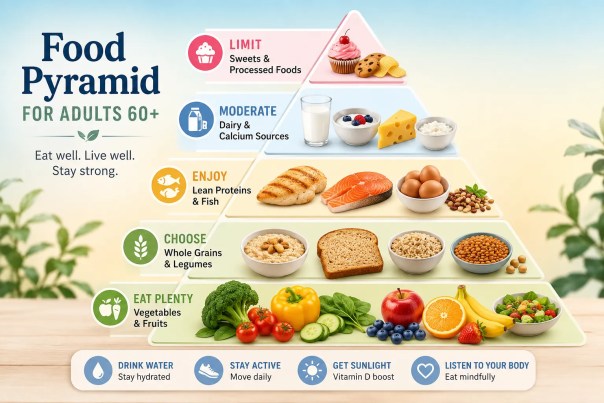
What Should People Over 60 Eat to Stay Healthy

Adults over 60 should build meals around vegetables, fruits, whole grains, lean proteins, and healthy fats while emphasizing nutrient density over calorie quantity. The body’s ability to absorb certain nutrients decreases with age, making food quality more important than ever.

A practical daily eating pattern includes:

  • 5-6 servings of vegetables (2½ cups) with emphasis on dark leafy greens, cruciferous vegetables, and colorful options
  • 2 servings of fruit (1 cup), preferably whole fruit rather than juice
  • 5-6 servings of whole grains (about 3 ounces), such as oatmeal, brown rice, quinoa, or whole wheat bread
  • 2-3 servings of lean protein (5-6 ounces total), including fish, poultry, beans, eggs, or lean meat
  • 2-3 servings of dairy or calcium-fortified alternatives for bone health
  • Healthy fats from sources like olive oil, nuts, seeds, and fatty fish

The shift from younger years involves eating smaller portions of more nutrient-rich foods. A 65-year-old typically needs 200-400 fewer calories daily than they did at 40, but nutrient requirements for most vitamins and minerals stay the same or increase [8].

How Much Protein Do You Need After 60

Adults over 60 need 1.0 to 1.2 grams of protein per kilogram of body weight daily to maintain muscle mass and function, which is higher than the standard recommendation for younger adults [6]. For a 150-pound person, this translates to roughly 68-82 grams of protein per day.

Why protein needs increase:

  • Age-related muscle loss (sarcopenia) accelerates after 60
  • Older bodies are less efficient at using dietary protein for muscle synthesis
  • Adequate protein helps maintain strength, balance, and independence
  • Protein supports immune function and wound healing

Practical protein targets per meal:

  • Breakfast: 20-25 grams (3 eggs, or Greek yogurt with nuts)
  • Lunch: 25-30 grams (4 ounces chicken breast, or 1 cup lentils)
  • Dinner: 25-30 grams (5 ounces fish, or tofu stir-fry)

Spreading protein evenly across meals works better than loading it all at dinner. The body can only process about 25-30 grams of protein for muscle synthesis at one time.

Choose high-quality protein sources: fish, poultry, eggs, dairy, legumes, and lean meats. Plant proteins work well when combined throughout the day to provide all essential amino acids. For more guidance on building strength through nutrition, see our practical nutrition guide.

Best Diet for Seniors With High Blood Pressure

The DASH (Dietary Approaches to Stop Hypertension) diet is specifically designed to lower blood pressure and works particularly well for adults over 60. It emphasizes potassium-rich foods, limits sodium to 1,500-2,300 mg daily, and focuses on whole foods rather than processed options.

Core DASH principles:

  • Vegetables and fruits: 8-10 servings daily provide potassium that helps balance sodium
  • Whole grains: 6-8 servings daily for fiber and magnesium
  • Low-fat dairy: 2-3 servings for calcium without saturated fat
  • Lean protein: Fish, poultry, beans (limit red meat to occasional servings)
  • Nuts and seeds: 4-5 servings per week for healthy fats and minerals
  • Sodium limit: Under 1,500 mg daily for best blood pressure control

Hidden sodium sources to watch:

  • Bread and rolls (150-200 mg per slice)
  • Deli meats and cured meats (400-1,000 mg per serving)
  • Canned soups (600-900 mg per cup)
  • Cheese (200-400 mg per ounce)
  • Condiments and sauces (100-300 mg per tablespoon)

Reading nutrition labels becomes essential. Choose products with less than 140 mg sodium per serving, and look for “no salt added” versions of canned goods. Cooking at home gives you full control over sodium content. For more specific guidance, visit our low sodium diet resource.

Mediterranean Diet vs Keto for Older Adults

Mediterranean Diet vs Keto for Older Adults

The Mediterranean diet offers more sustainable benefits for most adults over 60 than keto, with stronger long-term evidence for heart health, cognitive function, and overall longevity [9]. Keto may help with short-term weight loss but poses practical challenges and potential risks for older adults.

Mediterranean diet advantages:

  • Extensive research showing reduced heart disease, stroke, and cognitive decline
  • Easier to follow long-term with flexible food choices
  • Naturally anti-inflammatory with emphasis on omega-3 fats, olive oil, and colorful plants
  • Supports bone health with adequate calcium and vitamin D
  • Social and enjoyable eating pattern

Keto diet considerations:

  • May cause initial fatigue, constipation, and difficulty maintaining muscle mass
  • Requires strict carbohydrate restriction (under 50 grams daily) that many find hard to sustain
  • Can increase LDL cholesterol in some people
  • Limited fiber intake may affect digestive health
  • Potential medication interactions, especially for diabetes or blood pressure drugs

Choose Mediterranean if: You want a flexible, well-researched eating pattern that supports multiple aspects of healthy aging and is easy to maintain for years.

Consider keto only if: You’re working with a doctor to manage specific conditions like epilepsy or certain metabolic issues, and you’re willing to monitor closely. For most people over 60, the Mediterranean diet provides better long-term results without the restrictions.

Best Foods to Prevent Heart Disease in Seniors

Heart disease remains the leading cause of death for adults over 60, but diet plays a major role in prevention. Focus on foods that lower inflammation, improve cholesterol levels, and support healthy blood pressure.

Top heart-protective foods:

  • Fatty fish (salmon, mackerel, sardines): 2-3 servings weekly for omega-3 fatty acids that reduce inflammation and triglycerides
  • Leafy greens (spinach, kale, collards): Daily servings provide nitrates that help lower blood pressure
  • Berries (blueberries, strawberries): Rich in antioxidants that protect blood vessels
  • Whole grains (oats, barley, quinoa): Soluble fiber lowers LDL cholesterol
  • Nuts (walnuts, almonds): 1 ounce daily reduces heart disease risk by 30%
  • Olive oil: 2-3 tablespoons daily for monounsaturated fats
  • Beans and lentils: High fiber and plant protein without saturated fat
  • Avocados: Healthy fats that improve cholesterol ratios

Foods to limit:

  • Red and processed meats (high in saturated fat and sodium)
  • Full-fat dairy (choose low-fat versions)
  • Fried foods and trans fats
  • Sugary drinks and desserts
  • Refined grains (white bread, white rice)

Replace butter with olive oil, swap red meat for fish twice weekly, and choose whole fruits over juice. These simple substitutions add up to significant heart protection over time. Learn more through our heart healthy diet resources.

How to Lose Weight Safely After 60

Safe weight loss after 60 means losing 0.5 to 1 pound per week through moderate calorie reduction and maintained protein intake, not aggressive dieting that risks muscle loss. Preserving muscle mass matters more than rapid weight loss.

Safe approach:

  • Create a modest deficit: Reduce daily calories by 250-500 (not more)
  • Prioritize protein: Keep intake at 1.0-1.2 g/kg body weight to protect muscle
  • Maintain strength training: 2-3 sessions weekly prevent muscle loss during weight loss
  • Focus on whole foods: Vegetables, fruits, whole grains, and lean proteins naturally reduce calories while maintaining nutrition
  • Stay hydrated: Drink 6-8 glasses of water daily

What not to do:

  • Skip meals or drop below 1,200 calories daily (women) or 1,500 (men)
  • Cut protein to reduce calories
  • Rely on meal replacement shakes as your primary food source
  • Follow extreme elimination diets
  • Lose more than 1 pound per week consistently

Practical meal adjustments:

  • Use a 9-inch plate instead of 12-inch to control portions naturally
  • Fill half your plate with vegetables before adding protein and grains
  • Choose broth-based soups as first courses to reduce overall meal calories
  • Swap high-calorie snacks for fruit, vegetables with hummus, or a small handful of nuts

Weight loss after 60 should feel sustainable, not restrictive. If you’re constantly hungry or losing strength, you’re cutting too much. For guidance on maintaining strength during weight loss, see our resources on building muscle over 60.

What Vitamins and Minerals Are Most Important Over 60

Several nutrients become harder to absorb or require higher intake after 60. Meeting these needs through food first, with supplements filling specific gaps, supports bone health, immune function, and energy levels.

Priority nutrients:

NutrientDaily TargetWhy It MattersFood Sources
Calcium1,200 mg (women), 1,000 mg (men)Bone density, muscle functionDairy, fortified plant milk, leafy greens, sardines with bones
Vitamin D800-1,000 IUCalcium absorption, immune health, fall preventionFatty fish, fortified dairy, egg yolks, sunlight (often needs supplement)
Vitamin B122.4 mcgNerve function, red blood cells, energyMeat, fish, dairy, eggs, fortified cereals (absorption decreases with age)
Potassium3,400 mg (men), 2,600 mg (women)Blood pressure, heart rhythmBananas, potatoes, beans, spinach, yogurt
Fiber28 g (women), 34 g (men)Digestive health, cholesterol, blood sugarWhole grains, beans, vegetables, fruits
Magnesium420 mg (men), 320 mg (women)Bone health, muscle function, blood pressureNuts, seeds, whole grains, leafy greens, beans

When supplements make sense:

  • Vitamin D: Most adults over 60 need supplementation (blood test determines dose)
  • Vitamin B12: Consider if taking acid-reducing medications or following plant-based diet
  • Calcium: Only if dietary intake consistently falls short (don’t exceed 500 mg per dose)

Check with your doctor before starting supplements, especially if taking medications. Some supplements interact with blood thinners, blood pressure medications, or other common prescriptions.

Best Diet for Seniors With Diabetes

Best Diet for Seniors With Diabetes

Adults over 60 with diabetes need consistent carbohydrate portions at meals, emphasis on fiber and protein to slow glucose absorption, and regular meal timing to support stable blood sugar levels [8]. The Mediterranean diet adapted for diabetes management works well for most people.

Core principles:

  • Control carbohydrate portions: 45-60 grams per meal (3-4 servings) for most people
  • Choose complex carbs: Whole grains, beans, starchy vegetables over refined options
  • Pair carbs with protein and fat: Slows digestion and prevents blood sugar spikes
  • Eat at consistent times: Helps medications work predictably
  • Emphasize non-starchy vegetables: Fill half your plate without raising blood sugar

Practical plate method:

  • ½ plate: Non-starchy vegetables (leafy greens, broccoli, peppers, tomatoes)
  • ¼ plate: Lean protein (fish, chicken, tofu, eggs)
  • ¼ plate: Complex carbohydrates (brown rice, quinoa, sweet potato, beans)
  • Add: Small portion of fruit and healthy fat (olive oil, nuts, avocado)

Foods that help manage blood sugar:

  • Beans and lentils (high fiber, slow digestion)
  • Fatty fish (anti-inflammatory omega-3s)
  • Leafy greens (minimal carbs, high nutrients)
  • Nuts (healthy fats, protein, fiber)
  • Greek yogurt (protein without added sugar)
  • Cinnamon and vinegar (may modestly improve insulin sensitivity)

What to limit:

  • Sugary drinks and fruit juice
  • White bread, white rice, regular pasta
  • Sweetened yogurt and cereals
  • Processed snack foods
  • Large portions of any carbohydrate at once

Monitor your blood sugar response to different foods. Individual responses vary, and testing 1-2 hours after meals shows you what works for your body. For detailed meal planning, visit our diabetes diet resources.

Common Nutrition Mistakes People Over 60 Make

Many adults over 60 unknowingly follow eating patterns that worked at 40 but no longer support their current needs. Recognizing these patterns helps you adjust before problems develop.

Mistake 1: Not eating enough protein
Many older adults eat most protein at dinner and skimp at breakfast and lunch. This pattern doesn’t support muscle maintenance. Aim for 25-30 grams at each meal instead of 10-10-50.

Mistake 2: Drinking too little water
Thirst signals weaken with age, leading to chronic mild dehydration that causes fatigue, confusion, and constipation. Set reminders to drink water throughout the day, aiming for 6-8 glasses.

Mistake 3: Cutting fat too aggressively
Low-fat diets from the 1990s still influence many people. Your body needs healthy fats for nutrient absorption, brain health, and satiety. Include olive oil, nuts, avocados, and fatty fish regularly.

Mistake 4: Skipping meals to “save calories”
Skipping breakfast or lunch often leads to excessive hunger, poor food choices later, and inadequate protein distribution. Regular meals support stable blood sugar and better nutrition.

Mistake 5: Relying on the same foods repeatedly
Eating the same five meals every week limits nutrient variety. Different colored vegetables, rotating protein sources, and varied whole grains provide a broader nutrient profile.

Mistake 6: Not adjusting portions for lower activity
Portion sizes that maintained weight at 45 may cause gradual weight gain at 65 if activity has decreased. Slightly smaller portions of calorie-dense foods prevent this drift.

Mistake 7: Taking supplements instead of improving diet
Multivitamins can’t compensate for a poor diet. Whole foods provide fiber, antioxidants, and beneficial compounds that pills don’t contain. Focus on food first, supplements second.

Can You Build Muscle on a Diet After 60

Yes, adults over 60 can build muscle while losing fat, but it requires adequate protein intake (1.2 g/kg body weight), resistance training 2-3 times weekly, and a modest calorie deficit of no more than 500 calories daily [6]. Aggressive calorie cutting makes muscle gain nearly impossible.

Keys to building muscle while losing weight:

  • Protein at every meal: 25-30 grams distributed evenly throughout the day
  • Resistance training: Progressive strength work 2-3 times per week
  • Modest deficit: 250-500 calories below maintenance, not more
  • Adequate recovery: 7-8 hours sleep, rest days between strength sessions
  • Patience: Expect 0.5-1 pound muscle gain per month at best

Best protein timing:

  • Within 2 hours after strength training (20-30 grams)
  • Before bed (15-20 grams of slow-digesting protein like Greek yogurt or cottage cheese)
  • Evenly distributed across all meals

Protein-rich foods for muscle building:

  • Greek yogurt (20 g per cup)
  • Chicken breast (30 g per 4 oz)
  • Salmon (25 g per 4 oz)
  • Eggs (6 g per egg)
  • Cottage cheese (14 g per ½ cup)
  • Lentils (18 g per cooked cup)
  • Tofu (10 g per ½ cup)

Building muscle after 60 takes longer than at 30, but it’s absolutely possible with the right combination of nutrition and training. For more on strength training principles, see our guide to strength over 60.

Best Diet for Cognitive Health and Memory in Older Age

The MIND diet (Mediterranean-DASH Intervention for Neurodegenerative Delay) specifically targets brain health and shows the strongest evidence for slowing cognitive decline in older adults [9]. It combines Mediterranean and DASH principles with emphasis on specific brain-protective foods.

MIND diet priorities:

  • Leafy greens: 6+ servings weekly (kale, spinach, collards, lettuce)
  • Other vegetables: 1+ serving daily, emphasizing variety
  • Berries: 2+ servings weekly, especially blueberries and strawberries
  • Nuts: 5+ servings weekly (1 ounce = 1 serving)
  • Olive oil: Primary cooking fat
  • Whole grains: 3+ servings daily
  • Fish: 1+ serving weekly, preferably fatty fish
  • Beans: 3+ servings weekly
  • Poultry: 2+ servings weekly
  • Wine: Optional, up to 1 glass daily

Foods to limit for brain health:

  • Red meat (less than 4 servings weekly)
  • Butter and margarine (less than 1 tablespoon daily)
  • Cheese (less than 1 serving weekly)
  • Pastries and sweets (less than 5 servings weekly)
  • Fried or fast food (less than 1 serving weekly)

Why these foods matter:

Berries contain anthocyanins that cross the blood-brain barrier and reduce inflammation. Leafy greens provide folate, vitamin K, and lutein linked to slower cognitive decline. Omega-3 fats from fish support brain cell membrane health. Nuts and olive oil provide vitamin E and healthy fats that protect against oxidative stress.

Research shows people who follow the MIND diet closely have cognitive function equivalent to someone 7.5 years younger. Even moderate adherence shows benefits. For more on healthy eating for seniors, explore our additional resources.

How Many Calories Should a 60 Year Old Eat Per Day

Calorie needs at 60 depend on sex, height, weight, and activity level, but most adults need 1,600-2,400 calories daily. Sedentary women typically need 1,600-1,800 calories, while sedentary men need 2,000-2,200. Active individuals need 200-400 more.

Estimated daily calorie needs:

Women over 60:

  • Sedentary (little to no exercise): 1,600-1,800 calories
  • Moderately active (walking 1.5-3 miles daily): 1,800-2,000 calories
  • Active (walking 3+ miles daily or regular exercise): 2,000-2,200 calories

Men over 60:

  • Sedentary: 2,000-2,200 calories
  • Moderately active: 2,200-2,400 calories
  • Active: 2,400-2,800 calories

Why needs decrease:

  • Basal metabolic rate drops about 1-2% per decade after 30
  • Muscle mass typically decreases, lowering calorie burn
  • Activity levels often decrease
  • Body composition shifts toward more fat, less muscle

Rather than counting calories precisely:

  • Use hunger and satiety cues as primary guides
  • Monitor weight trends over weeks (stable = right amount)
  • Adjust portions if weight creeps up or down unintentionally
  • Focus on nutrient-dense foods that naturally satisfy with fewer calories

If you’re maintaining a healthy weight and eating nutritious foods, you’re likely eating the right amount. Calorie needs are estimates; your actual requirement is what maintains your weight and energy level.

Senior Diet Plans That Are Easy to Prepare

Practical meal planning for adults over 60 should minimize cooking time and complexity while maximizing nutrition and variety. Simple patterns and batch cooking make healthy eating sustainable.

Simple daily eating pattern:

Breakfast (5 minutes):

  • Greek yogurt with berries and walnuts
  • Oatmeal with banana and almond butter
  • Scrambled eggs with whole grain toast and fruit

Lunch (10 minutes or leftovers):

  • Large salad with canned salmon or chickpeas, olive oil dressing
  • Whole grain wrap with turkey, vegetables, hummus
  • Vegetable soup with whole grain crackers and cheese

Dinner (20-30 minutes or batch-cooked):

  • Baked fish with roasted vegetables and quinoa
  • Stir-fried chicken with mixed vegetables over brown rice
  • Bean chili with whole grain bread

Batch cooking strategies:

  • Sunday prep: Cook 2-3 proteins (baked chicken, hard-boiled eggs, beans) and 3-4 vegetables to mix and match all week
  • Grain batch: Cook large pot of brown rice or quinoa; refrigerate portions for quick meals
  • Soup and stew: Make large batches; freeze individual portions
  • Pre-cut vegetables: Wash and chop vegetables on one day for the week

Easy protein options:

  • Rotisserie chicken (pre-cooked, lasts 3-4 days)
  • Canned fish (salmon, sardines, tuna)
  • Eggs (hard-boiled batch keeps 1 week)
  • Frozen fish fillets (bake from frozen in 20 minutes)
  • Canned beans (rinse and add to any meal)

Keep these staples stocked:

  • Frozen vegetables (steam in microwave, 5 minutes)
  • Canned tomatoes and beans
  • Whole grain bread (freeze extra, toast from frozen)
  • Olive oil and vinegar
  • Nuts and nut butter
  • Greek yogurt
  • Eggs
  • Frozen fish and chicken

For more meal planning ideas, visit our practical meal planning resources.

Conclusion

The best diet for over 60 emphasizes whole foods, adequate protein, plenty of vegetables and fruits, and healthy fats while limiting sodium, added sugars, and processed foods. Mediterranean and DASH eating patterns consistently show the strongest evidence for supporting heart health, cognitive function, muscle maintenance, and overall longevity.

Start with clear steps: aim for 25-30 grams of protein at each meal, fill half your plate with vegetables, choose whole grains over refined options, and include healthy fats from olive oil, nuts, and fish. Keep sodium under 2,300 mg daily, stay hydrated with 6-8 glasses of water, and adjust portions to match your current activity level.

You don’t need to overhaul everything at once. Pick two or three changes that fit your routine and build from there. Simple batch cooking, keeping healthy staples on hand, and following basic meal patterns make nutritious eating practical and sustainable for everyday function.


References

[6] Pmc9320473 – https://pmc.ncbi.nlm.nih.gov/articles/PMC9320473/

[8] Eating Healthy At 60 And Beyond – https://www.ummhealth.org/health-library/eating-healthy-at-60-and-beyond

[9] Healthy Eating For Older Adults 2019062016868 – https://www.health.harvard.edu/blog/healthy-eating-for-older-adults-2019062016868


This article is part of our Healthy Eating Basics for Seniors series.

Share This Page

Heart Healthy Diet For Seniors: Everyday Food Habits

Heart Healthy Diet For Seniors

A heart healthy diet for seniors starts with what goes on the plate three times a day, not with complicated meal plans or specialty ingredients. Most people over 50 already know they should eat more vegetables and less salt. The harder part is figuring out what that looks like when planning Tuesday’s dinner or deciding what to keep in the pantry.

This guide covers the daily eating patterns that support cardiovascular health without requiring a kitchen overhaul or a degree in nutrition.

Key Takeaways

  • Regular meal timing and consistent portions help manage blood pressure and cholesterol more effectively than sporadic eating patterns
  • Sodium reduction matters most in packaged and restaurant foods, not the salt shaker
  • A heart healthy diet for seniors focuses on adding helpful foods rather than eliminating entire food groups
  • Practical grocery choices and simple meal templates make daily adherence easier than complex recipes
  • Small adjustments to current eating habits typically work better than complete diet overhauls
Professional editorial photograph () showing a clean kitchen counter with fresh heart-healthy ingredients arranged

What Makes a Diet Heart Healthy After 50

The basic framework involves more plants, less sodium, moderate portions, and attention to the types of fat consumed. Vegetables, fruits, whole grains, lean proteins, and unsaturated fats form the foundation. Processed meats, excess salt, added sugars, and saturated fats need reduction.

Blood pressure and cholesterol levels respond to consistent dietary patterns rather than occasional perfect meals. What someone eats most days matters more than what happens at a holiday dinner or birthday celebration.

Core components:

  • Vegetables and fruits at most meals
  • Whole grains instead of refined versions when possible
  • Fish twice weekly
  • Nuts, seeds, or legumes several times weekly
  • Olive oil or canola oil as primary cooking fats
  • Limited red meat and processed meats
  • Reduced sodium intake
  • Minimal added sugars

These elements align with eating patterns that research consistently links to lower cardiovascular risk, including Mediterranean-style and DASH diets.

Building a Daily Meal Pattern for Heart Health

() photograph of an actual daily meal schedule written on simple lined paper with a pen beside it, showing three meals and

Breakfast Options

Starting the day with whole grains, fruit, and protein creates a foundation that doesn’t spike blood sugar or leave someone hungry by mid-morning.

Practical choices:

  • Oatmeal with berries and walnuts
  • Whole grain toast with natural peanut butter and banana slices
  • Plain Greek yogurt with fresh fruit and ground flaxseed
  • Scrambled eggs with vegetables and whole grain toast
  • Whole grain cereal with low-fat milk and fruit

Skip or limit breakfast meats like bacon and sausage, which contain high amounts of sodium and saturated fat. Pastries, sweetened cereals, and white bread products offer little nutritional benefit.

Lunch and Dinner Structure

A heart healthy diet for seniors works best when lunch and dinner follow a similar template: half the plate with vegetables, one quarter with lean protein, one quarter with whole grains or starchy vegetables.

For practical midday examples that follow this balanced approach, see these healthy lunches for seniors.

Protein sources:

  • Baked or grilled fish (salmon, trout, mackerel, sardines)
  • Skinless chicken or turkey
  • Beans, lentils, or chickpeas
  • Tofu or tempeh
  • Lean cuts of pork or beef (limited portions, less frequently)

Vegetable variety matters more than exotic choices. Frozen vegetables work as well as fresh and often cost less. Canned vegetables are acceptable if labeled low-sodium or no-salt-added.

Whole grain options:

  • Brown rice, quinoa, or farro
  • Whole wheat pasta
  • Barley or bulgur
  • Sweet potatoes or regular potatoes with skin
  • Whole grain bread

Snacks and Beverages

Between-meal eating should provide nutrients rather than just calories. Fruit, raw vegetables with hummus, unsalted nuts, or low-fat yogurt all fit a heart healthy pattern.

Water remains the best beverage choice. Unsweetened tea and coffee are fine in moderation. Limit fruit juice to small portions due to sugar content. Reduce or eliminate sugar-sweetened beverages entirely.

Sodium Reduction in Real Life

Most dietary sodium comes from packaged foods, restaurant meals, and processed items rather than the salt shaker. Reading labels and choosing lower-sodium versions makes a bigger difference than eliminating salt from cooking.

High-sodium foods to limit:

  • Deli meats and cured meats
  • Canned soups (unless low-sodium)
  • Frozen dinners and pizza
  • Salty snacks (chips, pretzels, crackers)
  • Cheese (use smaller portions)
  • Condiments (soy sauce, teriyaki sauce, salad dressings)
  • Pickled foods

Lower-sodium alternatives:

  • Fresh or frozen vegetables instead of canned
  • Dried beans cooked at home or low-sodium canned versions
  • Fresh poultry, fish, or meat instead of processed versions
  • Herbs and spices for flavor instead of salt
  • Homemade soups and sauces
  • Unsalted or lightly salted nuts

Aim for less than 2,300 mg of sodium daily, with 1,500 mg as an ideal target for those with high blood pressure. Checking nutrition labels becomes easier with practice. Compare similar products and choose versions with lower sodium per serving.

Practical Grocery Shopping for Heart Health

() close-up editorial photograph of a grocery store shopping cart view from shopper perspective, filled with heart-healthy

The outer perimeter of most grocery stores contains fresh produce, meat, fish, and dairy. The center aisles hold packaged goods, where label reading becomes important.

Shopping list framework:

Produce section:

  • Dark leafy greens (spinach, kale, collards)
  • Colorful vegetables (peppers, tomatoes, carrots, broccoli)
  • Fresh or frozen berries
  • Apples, oranges, bananas
  • Onions, garlic

Protein sources:

  • Fresh or frozen fish
  • Chicken breast or thighs (skin removed)
  • Eggs
  • Dried or canned beans (low-sodium)
  • Plain Greek yogurt

Grains and starches:

  • Brown rice or quinoa
  • Whole wheat bread and pasta
  • Oats (old-fashioned or steel-cut)
  • Sweet potatoes

Pantry staples:

  • Olive oil
  • Canola oil
  • Unsalted nuts (almonds, walnuts)
  • Herbs and spices
  • Low-sodium broth
  • Canned tomatoes (no-salt-added)

Frozen vegetables and fruits cost less than fresh versions and last longer. They’re picked at peak ripeness and retain nutritional value. Stock the freezer with plain versions without added sauces or seasonings.

Making Changes That Last

Complete diet overhauls rarely stick. Small adjustments to current habits typically work better than trying to eat perfectly starting Monday.

Gradual changes:

  • Add one extra vegetable serving to dinner this week
  • Switch from regular bread to whole grain bread
  • Replace one red meat meal per week with fish
  • Try one new recipe using beans or lentils
  • Buy low-sodium versions of three regularly purchased items

Work with Your Energy Levels:

Realistic expectations acknowledge that energy and motivation fluctuate. Plan easier options for lower-energy days.

Energy-matched choices:
• High energy days: Try new recipes or prep vegetables
• Medium energy days: Use frozen vegetables and simple preparations
• Low energy days: Choose canned soups, pre-made salads, or simple sandwiches

This flexibility supports the simple daily habits that make healthy aging sustainable over time.

Track which changes feel manageable and which create frustration. Keep the ones that fit into daily routines. Adjust or abandon the ones that don’t.

A heart healthy diet for seniors doesn’t require giving up all favorite foods. Occasional treats fit into an overall pattern focused on nutrient-dense choices most of the time.

Eating Out and Social Situations

Restaurant meals and social gatherings present challenges but don’t need to derail heart-healthy eating.

Restaurant strategies:

  • Request sauces and dressings on the side
  • Ask for vegetables instead of fries
  • Choose grilled, baked, or broiled instead of fried
  • Split entrees or take half home
  • Skip the bread basket or limit to one piece
  • Order water or unsweetened beverages

Many restaurants provide nutrition information online. Review options before arriving to identify reasonable choices without pressure.

At social gatherings, eat a small healthy snack before leaving home to avoid arriving hungry. Focus on vegetable options, lean proteins, and smaller portions of higher-calorie items.

Conclusion

A heart healthy diet for seniors builds on regular meal patterns, sodium awareness, and practical food choices that fit into daily life. The foundation includes more vegetables and fruits, whole grains, lean proteins, and healthy fats, with less sodium, added sugar, and saturated fat.

Start with one or two changes rather than attempting a complete transformation. Add vegetables to current meals. Switch to whole grain versions of familiar foods. Choose lower-sodium options when shopping. These small adjustments compound over time into meaningful improvements in cardiovascular health.

The goal is sustainable eating habits that support heart health without requiring constant willpower or complicated meal preparation. Focus on what to add rather than only what to eliminate, and build a pattern that works for the long term.


This article is part of our Healthy Eating Basics for Seniors series.

Share This Page