Tag Archives: seniors

20 Minute Exercise For Seniors: A Low-Impact Cardio Session

20 Minute Exercise For Seniors: A Low-Impact Cardio Session

Last updated: July 31, 2026

Quick Answer

A 20 minute exercise for seniors provides enough time for a complete low-impact cardio session that includes a warm-up, sustained movement to raise heart rate, and a cool-down. This duration allows cardiovascular benefit without excessive joint stress, making it practical for most adults over 65 who can stand or move independently. The session focuses on continuous, gentle movement rather than high intensity.

Key Takeaways

  • Twenty minutes is long enough to improve cardiovascular fitness when done regularly at moderate effort
  • A complete session includes 5 minutes of warm-up, 12 minutes of cardio movement, and 3 minutes of cool-down
  • Low-impact cardio options include marching in place, step-touches, seated cycling motions, and walking patterns
  • Most seniors should aim for 3-5 sessions per week on non-consecutive days
  • Target heart rate during cardio should reach 50-70% of maximum (220 minus age)
  • Joint-friendly movement keeps one foot on the ground at all times and avoids jumping or twisting
  • Modifications allow people with arthritis or mobility limits to participate safely
  • No equipment is required, though a sturdy chair for support helps with balance
Professional () hero image with '20 Minute Exercise For Seniors' in large white on a semi-transparent navy panel, centered

What Are the Best 20 Minute Exercises for Seniors

The best exercises for a 20 minute senior cardio session are continuous, rhythmic movements that raise heart rate without jarring joints. Marching in place, step-touches side to side, heel raises with arm circles, and gentle knee lifts form the core of an effective routine. These movements keep one foot on the ground, allow you to control pace, and can be done in any room with enough space to move your arms.

Walking in place or around the house works well as the main cardio component. Add arm movements (reaching overhead, pushing forward, or circling) to increase effort without moving faster. If balance is steady, try adding direction changes: four steps forward, four steps back, or walking in a small square pattern.

Effective cardio movements for a 20-minute session:

  • Marching in place with arm swings
  • Step-touch side to side
  • Heel-toe walking patterns
  • Alternating knee lifts (low height)
  • Grapevine steps (step-together-step)
  • Seated leg cycling motions
  • Standing hip circles with support

Choose 4-5 movements and rotate through them during the 12-minute cardio block. Repeat each for 2-3 minutes before switching to the next. This variety prevents boredom and distributes effort across different muscle groups.

Can Seniors Get a Good Workout in 20 Minutes

Can Seniors Get a Good Workout in 20 Minutes

Yes, 20 minutes provides enough time for cardiovascular benefit when the session includes sustained moderate-effort movement. The key is keeping your heart rate elevated for at least 10-12 continuous minutes, which fits comfortably into a 20-minute window after warm-up and before cool-down. Research on exercise duration shows that shorter sessions done consistently produce similar cardiovascular improvements to longer workouts.

The workout quality depends on effort level, not just time. During the cardio portion, aim to breathe harder than at rest but still be able to speak in short sentences. This moderate intensity (often called “conversational pace”) is where most cardiovascular benefit occurs for older adults.

A 20-minute session is particularly practical because it fits into most daily schedules without requiring significant time commitment or causing excessive fatigue. Many seniors find this duration sustainable 3-5 times per week, which matters more than occasionally doing longer sessions.

20 Minute Senior Exercise Routine at Home

A complete home routine divides the 20 minutes into three phases: warm-up (5 minutes), cardio work (12 minutes), and cool-down (3 minutes). This structure prepares joints and muscles, delivers cardiovascular benefit, and prevents dizziness or muscle tightness afterward.

Complete 20-minute home cardio routine:

Warm-Up (5 minutes):

  1. Shoulder rolls forward and back (30 seconds)
  2. Arm circles, small then larger (1 minute)
  3. Gentle marching in place, slow pace (2 minutes)
  4. Hip circles, holding chair for support (1 minute)
  5. Ankle circles and calf raises (30 seconds)

Cardio Block (12 minutes):

  1. Marching in place with arm swings (3 minutes)
  2. Step-touch side to side (3 minutes)
  3. Heel-toe walking forward and back (3 minutes)
  4. Alternating knee lifts with overhead reach (3 minutes)

Cool-Down (3 minutes):

  1. Slow walking in place (1 minute)
  2. Standing quad stretch, holding chair (1 minute)
  3. Deep breathing with arm raises (1 minute)

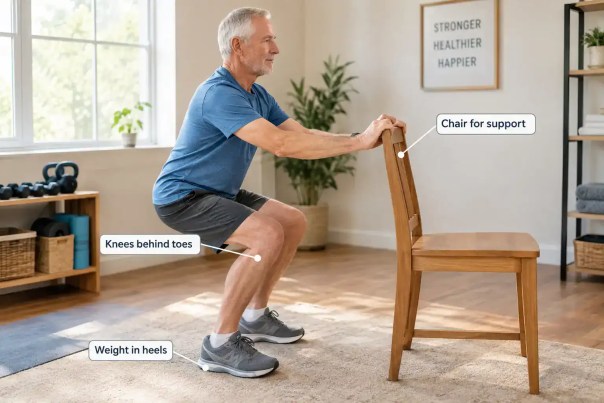
Keep a sturdy chair nearby throughout the session for balance support. If any movement causes pain, skip it and continue with the others. The goal is continuous movement at a comfortable pace, not perfect execution of every exercise.

For additional guidance on building a regular practice, see our article on effective exercise routines for seniors.

How Often Should Seniors Exercise Per Week

Most adults over 65 should aim for 3-5 cardio sessions per week, with at least one rest day between sessions. This frequency allows cardiovascular adaptation while giving muscles and joints time to recover. Starting with 3 sessions per week and adding a fourth or fifth after several weeks works well for people new to regular exercise.

Spacing sessions across the week matters more than clustering them together. Three evenly distributed sessions (Monday, Wednesday, Friday, for example) provide better results than three consecutive days followed by four days off. The body adapts to regular stimulus, not sporadic effort.

If 20 minutes feels too long initially, start with 10-minute sessions and gradually increase duration over 4-6 weeks. Consistency at a shorter duration builds the habit and fitness base needed to sustain longer sessions.

Weekly schedule example:

  • Monday: 20-minute cardio
  • Tuesday: Rest or gentle stretching
  • Wednesday: 20-minute cardio
  • Thursday: Rest
  • Friday: 20-minute cardio
  • Saturday: Light activity (walking, gardening)
  • Sunday: Rest

Is 20 Minutes of Exercise Enough for Seniors

Twenty minutes of cardio exercise meets the minimum threshold for cardiovascular benefit when done at moderate intensity. Current physical activity guidelines recommend 150 minutes of moderate activity per week, which breaks down to five 30-minute sessions or seven 20-minute sessions. A 20-minute routine done 5 times per week provides 100 minutes, which is two-thirds of the recommended amount and significantly better than no structured exercise.

For seniors focused specifically on cardiovascular health, 20 minutes of continuous movement at moderate effort produces measurable improvements in heart function, circulation, and endurance. The session length is less important than maintaining consistent effort throughout the cardio block and repeating the routine multiple times per week.

However, a complete fitness program includes more than cardio. Balance work, strength training, and flexibility exercises address other aspects of functional ability. Consider alternating 20-minute cardio days with strength exercises or balance work on other days of the week.

Is 20 Minutes of Exercise Enough for Seniors

Low Impact Cardio Exercises for Seniors Over 65

Low-impact cardio keeps one foot in contact with the ground at all times, eliminating the joint stress that comes from jumping or running. For seniors over 65, this approach allows sustained movement without aggravating knees, hips, or ankles. The cardiovascular benefit comes from duration and consistency, not from high-impact force.

Joint-friendly cardio movements:

  • Marching: Lift knees to comfortable height while swinging arms naturally
  • Step-touch: Step right foot to side, bring left foot to meet it, then reverse
  • Heel-toe walk: Walk forward placing heel down first, roll through foot to toe
  • Arm circles with steps: Small steps in place while circling arms forward or back
  • Side steps: Step sideways along a wall or counter for balance support
  • Seated cycling: Sit in sturdy chair and pedal legs in cycling motion

Each movement can be adjusted for individual ability. Smaller steps, lower knee lifts, or slower pace all maintain the low-impact nature while matching current fitness level. The goal is continuous movement that feels challenging but sustainable for the full cardio block.

For more options and variations, see our guide to low-impact exercises for seniors.

Senior Cardio Exercises That Don’t Hurt Joints

Joint-friendly cardio avoids twisting motions, sudden direction changes, and movements that load joints in awkward positions. Straight-line movements (forward, back, side to side) are safer than pivoting or rotating. Controlled, deliberate motions cause less joint stress than quick, jerky movements.

Principles for joint protection:

  • Keep movements smooth and controlled, not bouncy
  • Avoid locking knees or elbows at full extension
  • Step with soft knees, not stiff legs
  • Use a chair or wall for balance support when needed
  • Stop any movement that causes sharp pain
  • Modify range of motion if stiffness limits movement

If standing cardio causes knee or hip discomfort, seated versions work well. Sit in a sturdy chair without wheels and perform marching motions, leg extensions, or cycling movements with your legs. Add arm movements (punches, reaches, circles) to increase effort. Seated cardio provides cardiovascular benefit without loading weight-bearing joints.

Water-based exercise (walking in a pool) is another low-impact option, though it requires access to a pool and isn’t covered in a home cardio routine. For home-based work, the movements listed above provide effective alternatives that protect joints while raising heart rate.

Best Time of Day for Seniors to Exercise

The best time to exercise is whenever you can do it consistently and when your body feels most ready to move. Many seniors prefer morning sessions because energy levels are higher and the workout is completed before other daily activities interfere. Others find mid-morning or early afternoon better after joints have loosened up from morning stiffness.

Avoid exercising immediately after waking or right after meals. Give yourself 30-60 minutes after getting up to move around, hydrate, and eat a light snack if needed. Wait at least one hour after a full meal before starting cardio work to avoid digestive discomfort.

Time-of-day considerations:

  • Morning (8-10 AM): Energy is often higher, but joints may be stiff; warm up thoroughly
  • Mid-morning (10 AM-noon): Body is fully awake, stiffness has eased, good for most people
  • Early afternoon (1-3 PM): Post-lunch energy dip may affect some people; others feel fine
  • Late afternoon (4-6 PM): Body temperature peaks, muscles are warm, but may interfere with dinner
  • Evening (after 6 PM): Can interfere with sleep for some people; avoid within 2-3 hours of bedtime

Consistency matters more than timing. Choose a time slot that fits your daily routine and stick with it. Your body will adapt to expect movement at that time, making it easier to maintain the habit.

What Heart Rate Should Seniors Aim for During Exercise

A safe target heart rate for moderate cardio is 50-70% of your maximum heart rate. Maximum heart rate is estimated as 220 minus your age. For a 70-year-old, maximum heart rate is approximately 150 beats per minute, so the moderate exercise zone is 75-105 beats per minute.

To check heart rate during exercise, pause briefly and count your pulse for 15 seconds, then multiply by four. Place two fingers on the inside of your wrist below the thumb, or on the side of your neck below the jaw. Count the beats you feel.

Heart rate zones by age:

AgeMax HR (220-age)50% (lower end)70% (upper end)
60160 bpm80 bpm112 bpm
65155 bpm78 bpm109 bpm
70150 bpm75 bpm105 bpm
75145 bpm73 bpm102 bpm
80140 bpm70 bpm98 bpm

If checking pulse is difficult, use the “talk test” instead. During moderate exercise, you should be able to speak in short sentences but not hold a long conversation comfortably. If you can sing, you’re working too lightly. If you can’t speak at all, you’re working too hard.

People taking beta-blockers or certain other heart medications may have artificially lowered heart rates. In these cases, rely on perceived effort and the talk test rather than specific heart rate numbers.

What Heart Rate Should Seniors Aim for During Exercise

Can Seniors with Arthritis Do 20 Minute Cardio Workouts

Yes, seniors with arthritis can do 20-minute cardio workouts by choosing movements that don’t aggravate affected joints and modifying intensity as needed. Arthritis causes joint inflammation and stiffness, but gentle movement actually helps by increasing circulation and maintaining joint mobility. The key is avoiding high-impact movements and respecting pain signals.

For arthritis in knees or hips, seated cardio removes weight-bearing stress while still providing cardiovascular benefit. Sit in a sturdy chair and perform marching motions, leg extensions, or arm movements. For arthritis in hands or wrists, avoid gripping objects and keep arm movements gentle without making fists.

Arthritis-friendly modifications:

  • Use smaller range of motion if full movement causes pain
  • Slow the pace to reduce joint stress
  • Take brief pauses if needed, then resume movement
  • Focus on smooth, controlled motions rather than speed
  • Warm up for 7-8 minutes instead of 5 to thoroughly prepare joints
  • Apply heat to stiff joints before exercise if it helps

Stop if you experience sharp pain, significant swelling, or pain that persists more than two hours after exercise. Some mild achiness during and immediately after movement is normal, but worsening pain indicates the need to modify further or rest.

For additional gentle options, see our article on gentle exercises for seniors.

Senior Exercise Routine for Beginners with No Equipment

A beginner routine uses only body weight and a sturdy chair for support. No special equipment is needed. The focus is on learning basic movement patterns and building the habit of regular exercise before adding complexity or intensity.

Beginner 20-minute routine:

Warm-Up (5 minutes):

  1. Seated arm circles (1 minute)
  2. Seated marching (2 minutes)
  3. Standing weight shifts side to side (1 minute)
  4. Gentle neck rolls and shoulder shrugs (1 minute)

Cardio Block (12 minutes):

  1. Marching in place, slow pace, holding chair if needed (4 minutes)
  2. Step-touch side to side (4 minutes)
  3. Marching in place with arm swings (4 minutes)

Cool-Down (3 minutes):

  1. Slow walking in place (1 minute)
  2. Standing calf stretch against chair (1 minute)
  3. Seated deep breathing (1 minute)

Start with this basic routine 3 times per week for 2-3 weeks. Once it feels comfortable, add variety by including different arm movements during marching or increasing the pace slightly. The progression should feel gradual, not sudden.

If standing for 12 minutes is too difficult initially, do the entire cardio block seated. Sit in a chair and perform marching motions, leg lifts, and arm circles. This still provides cardiovascular benefit while you build endurance to eventually stand for longer periods.

How to Modify Exercises for Seniors with Mobility Issues

Mobility limitations require adjustments to range of motion, support level, and movement selection. The goal is to maintain cardiovascular activity within current abilities, not to force movements that aren’t safe or comfortable.

Modification strategies:

  • Balance concerns: Keep one hand on a chair, counter, or wall throughout the session
  • Leg weakness: Reduce knee lift height; step in place without lifting feet
  • Hip or knee pain: Sit for the entire cardio block; use leg and arm movements from the chair
  • Limited stamina: Break the 12-minute cardio block into two 6-minute segments with a 2-minute rest between
  • Foot or ankle problems: Avoid step-touch movements; use marching in place with minimal foot lift

Seated cardio provides a complete workout when standing isn’t feasible. Sit in a sturdy chair without wheels, feet flat on the floor. Perform marching motions by lifting knees alternately, add arm movements (circles, reaches, punches), and maintain continuous movement for the full cardio duration.

For more seated options, see our guide to seated chair exercises for seniors.

Common Mistakes Seniors Make When Starting to Exercise

The most common mistake is starting too intensely and causing soreness or injury that interrupts consistency. Begin at a comfortable pace and duration, then gradually increase effort over several weeks. Another frequent error is skipping the warm-up, which leaves joints and muscles unprepared for movement and increases injury risk.

Mistakes to avoid:

  • Doing too much too soon: Start with 3 sessions per week, not 7
  • Skipping warm-up or cool-down: Always include both to prepare and recover properly
  • Holding your breath: Breathe continuously throughout all movements
  • Ignoring pain signals: Stop any movement that causes sharp or worsening pain
  • Comparing yourself to others: Progress at your own pace based on your current ability
  • Exercising through illness: Rest when sick; resume after recovery
  • Not drinking water: Hydrate before, during, and after exercise

Consistency matters more than intensity. Three moderate sessions per week done for months produce better results than one week of intense daily exercise followed by burnout and quitting.

Is Walking or Swimming Better Cardio for Seniors

Both walking and swimming are excellent low-impact cardio options for seniors. Walking requires no special equipment or location and can be done anywhere. It’s weight-bearing, which helps maintain bone density. Swimming eliminates joint stress completely and works the entire body, but requires pool access and swimming ability.

For a 20-minute home cardio session, walking (either outdoors or in place indoors) is more practical than swimming. Walking in place, around the house, or outside provides the continuous movement needed for cardiovascular benefit without travel or facility access.

Walking advantages:

  • No equipment or facility needed
  • Can be done anywhere, anytime
  • Weight-bearing helps bone health
  • Easy to monitor and adjust pace

Swimming advantages:

  • Zero joint impact
  • Full-body workout
  • Cooling water prevents overheating
  • Resistance from water builds strength

If you have access to a pool and enjoy swimming, it’s an excellent choice for cardio work. For home-based routines, walking-based movements (marching, step patterns, heel-toe walking) form the core of an effective 20-minute session.

For more walking-specific guidance, see our article on simple walking exercises for seniors.

Conclusion

A 20 minute exercise for seniors provides enough time for a complete low-impact cardio session when structured with a warm-up, sustained movement block, and cool-down. The routine requires no equipment, can be done at home, and fits into most daily schedules. Consistency matters more than intensity, three to five sessions per week at moderate effort produce cardiovascular benefit and improve endurance.

Start with the basic routine outlined above, focusing on smooth, controlled movements that keep one foot on the ground. Modify as needed for joint comfort, balance, or stamina. Check heart rate or use the talk test to confirm you’re working at moderate intensity during the cardio block.

Next steps:

  1. Choose three days this week to try the 20-minute routine
  2. Set up a clear space with a sturdy chair for support
  3. Mark your calendar with specific times for each session
  4. Track how you feel after each workout to monitor progress
  5. Adjust pace or movements as needed to match your current ability

Regular cardio work supports heart health, maintains mobility, and builds the stamina needed for daily activities. Twenty minutes is a practical starting point that can be sustained long-term.


This article is part of our Time-Based Exercises for Seniors series.

Share This Page

30 Minute Workout For Seniors: A Complete Weekly Strength Session

30 Minute Workout For Seniors: A Complete Weekly Strength Session

Last updated: July 31, 2026

Quick Answer

A 30 minute workout for seniors provides enough time for a complete strength training session when structured efficiently. Three sessions per week, each lasting 30 minutes, meets the recommended strength training guidelines for adults 65 and older while fitting into a realistic weekly schedule. This time frame allows for 6-8 exercises targeting major muscle groups, proper rest between sets, and a brief warm-up and cool-down.

Key Takeaways

  • 30 minutes is sufficient for a complete strength session when exercises target multiple muscle groups efficiently
  • Three 30-minute strength sessions per week meets current physical activity guidelines for older adults
  • A structured session includes 5 minutes warm-up, 20-22 minutes of strength exercises, and 3-5 minutes cool-down
  • Rest days between sessions (Monday-Wednesday-Friday pattern) allow muscle recovery and reduce injury risk
  • Equipment needs are minimal: light dumbbells (3-8 lbs), a resistance band, and a sturdy chair
  • Most seniors see noticeable strength improvements within 8-12 weeks of consistent practice
  • Low-impact modifications make the routine accessible for those with arthritis, knee pain, or back concerns

What’s the Best 30 Minute Workout Routine for Seniors

The most effective 30 minute workout for seniors follows a structured format: 5 minutes of warm-up movement, 20-22 minutes of strength exercises covering all major muscle groups, and 3-5 minutes of cool-down stretching. This approach ensures adequate time for each component without rushing.

A practical weekly structure uses three sessions on non-consecutive days, typically Monday, Wednesday, and Friday. Each session includes 6-8 exercises performed for 2 sets of 8-12 repetitions, with 30-60 seconds rest between sets.

Sample 30-minute session structure:

  • Minutes 0-5: Warm-up (marching in place, arm circles, gentle leg swings, hip rotations)
  • Minutes 5-27: Strength exercises (described below)
  • Minutes 27-30: Cool-down (standing or seated stretches for major muscle groups)

Core strength exercises for the 30-minute session:

  1. Chair squats (legs, glutes): 2 sets ร— 10 reps
  2. Wall or counter push-ups (chest, arms): 2 sets ร— 8-10 reps
  3. Seated or standing rows with resistance band (back, shoulders): 2 sets ร— 10 reps
  4. Bicep curls with light dumbbells (arms): 2 sets ร— 10 reps
  5. Standing heel raises (calves, balance): 2 sets ร— 12 reps
  6. Seated knee extensions (quadriceps): 2 sets ร— 10 reps per leg
  7. Standing hip abduction (outer thigh, balance): 2 sets ร— 10 reps per leg
  8. Modified plank or wall plank (core): 2 sets ร— 15-30 seconds

This sequence alternates between upper and lower body exercises, allowing one muscle group to rest while another works. The pattern keeps the heart rate steady without causing excessive fatigue.

For those new to structured exercise, starting with 1 set of each exercise and gradually adding the second set over 2-3 weeks prevents soreness and builds confidence. More detailed guidance on building a strength training routine can help with progression planning.

Can Seniors Build Muscle in Just 30 Minutes a Day

Can Seniors Build Muscle in Just 30 Minutes a Day

Yes, seniors can build meaningful muscle mass with 30-minute strength sessions performed 3 times per week. Research on sarcopenia (age-related muscle loss) shows that moderate-to-high intensity resistance training for 30-60 minutes at least twice weekly produces measurable muscle gains in older adults.

The key factors are intensity and progressive overload, not session length. A 30-minute workout that challenges muscles with appropriate resistance produces better results than a longer, easier session.

What makes 30 minutes effective:

  • Time under tension: Muscles respond to the challenge of lifting resistance, not the total workout duration
  • Recovery between sessions: The 48-hour rest period between workouts allows muscle protein synthesis to occur
  • Consistency: Three weekly sessions maintained over months matter more than occasional longer workouts
  • Progressive challenge: Gradually increasing weight, repetitions, or exercise difficulty drives continued adaptation

Most seniors notice improved strength in daily activities (carrying groceries, climbing stairs, getting up from chairs) within 4-6 weeks. Visible muscle changes typically appear after 8-12 weeks of consistent training.[7]

Starting with lighter weights and focusing on proper form prevents injury while still providing enough stimulus for muscle growth. As strength improves, increasing resistance by small increments (1-2 pounds for dumbbells, or moving to a stronger resistance band) maintains progress.

30 Minute Senior Workout With No Equipment Needed

A complete 30 minute workout for seniors requires minimal equipment and can be adapted to use only bodyweight and household items. The essential movements remain the same; the resistance comes from body position and gravity rather than external weights.

No-equipment exercise substitutions:

  • Squats using a chair (touch and go, no weights needed)
  • Wall push-ups (hands on wall instead of floor)
  • Doorway rows (hold door frame, lean back, pull body forward)
  • Water bottle or soup can curls (household items as light weights)
  • Standing leg lifts (forward, side, and back for hip strength)
  • Calf raises holding counter (bodyweight only)
  • Seated marching (knee lifts while sitting)
  • Wall sits (back against wall, knees bent, hold position)

This approach makes the workout accessible regardless of budget or space constraints. A sturdy chair and a clear wall space are the only requirements.

For those who want to add minimal equipment over time, a single resistance band (light to medium tension) and a pair of 5-pound dumbbells expand exercise options significantly. These items typically cost less than $30 total and last for years.

The 10-minute workout format can be repeated three times with brief rests to create a 30-minute session when equipment is limited.

How Often Should Seniors Do Strength Training Per Week

Seniors should perform strength training on at least 2 days per week, with 3 days being optimal for most people. Current physical activity guidelines for adults 65 and older recommend strength exercises targeting all major muscle groups on 2 or more non-consecutive days weekly.[7]

The non-consecutive day pattern is important. Muscles need 48 hours to recover and rebuild after a strength session. Training the same muscle groups on back-to-back days increases injury risk and reduces the effectiveness of each workout.

Common weekly patterns:

  • Minimum effective dose: Tuesday and Friday (2 days, 72+ hours between sessions)
  • Optimal pattern: Monday, Wednesday, Friday (3 days, 48 hours between sessions)
  • Alternative pattern: Tuesday, Thursday, Saturday (3 days, different weekend timing)

Three 30-minute sessions per week totals 90 minutes of strength training, which when combined with regular walking or other moderate activity, meets the full physical activity recommendations for older adults.[5]

Some seniors prefer splitting their routine into shorter, more frequent sessions, for example, a 15-minute session 5-6 days per week. While this approach can work, the traditional 3-day pattern with full rest days often produces better strength gains because each session can include higher intensity work.

Starting with 2 days per week and adding a third day after 3-4 weeks allows the body to adapt gradually.

How Often Should Seniors Do Strength Training Per Week

Low Impact 30 Minute Workout for Seniors With Arthritis

Seniors with arthritis can safely perform a 30 minute workout by choosing low-impact exercise variations that minimize joint stress while maintaining muscle challenge. The key is selecting movements that work through a comfortable range of motion without forcing painful positions.

Arthritis-friendly exercise modifications:

  • Seated exercises: Perform most movements while sitting to reduce weight-bearing stress on hips and knees
  • Partial range of motion: Move through the pain-free portion of each exercise rather than forcing full range
  • Slower tempo: Control the movement speed to avoid jarring impacts
  • Resistance bands over weights: Bands provide smooth, adjustable resistance without grip strain
  • Warm water option: Exercises performed in a warm pool reduce joint load by 90%

Sample arthritis-adapted routine:

  1. Seated marching (5 minutes warm-up)
  2. Seated chest press with band
  3. Seated leg extensions (partial range)
  4. Seated rows with band
  5. Seated bicep curls with light weights or bands
  6. Seated heel raises (or seated calf press)
  7. Seated torso rotations
  8. Gentle seated stretches (cool-down)

Each exercise is performed for 2 sets of 8-12 repetitions, with rest as needed. The entire sequence fits comfortably within 30 minutes.

Joint stiffness often improves with movement, so arthritis symptoms may feel better after a workout than before. Morning stiffness typically responds well to gentle movement, though some people prefer afternoon sessions when joints feel more mobile.

For those with significant knee or hip arthritis, seated workout options provide a complete alternative that eliminates standing exercises entirely.

Is 30 Minutes Enough Exercise for Seniors or Do I Need More

A 30 minute workout for seniors is sufficient for strength training but should be part of a broader weekly activity pattern that includes aerobic movement. The complete recommendation for adults 65+ includes 150 minutes of moderate aerobic activity plus strength training on 2+ days per week.[7]

How 30-minute strength sessions fit into weekly activity:

  • Strength training: Three 30-minute sessions = 90 minutes per week โœ“
  • Aerobic activity: Daily walks or other moderate activity = 150+ minutes per week โœ“
  • Balance practice: Included within strength sessions or as separate 5-10 minute sessions โœ“

This pattern means a senior doing three 30-minute strength workouts plus 20-30 minutes of walking on most days meets the full physical activity guidelines.

For those unable to walk easily, the strength session can incorporate more continuous movement between exercises (circuit style) to add an aerobic component. Marching in place for 30-60 seconds between strength exercises keeps the heart rate elevated without requiring additional workout time.

Some seniors prefer combining formats, for example, a 20-minute strength session followed by a 10-minute walk, or a 10-minute core workout added to a 20-minute strength session.

The 30-minute time frame works well because it’s long enough to be effective but short enough to maintain focus and energy throughout the session. Longer workouts often lead to fatigue that compromises form in later exercises.

Senior Workout vs Younger Adult Workout: What’s Different

Senior workouts differ from younger adult programs in exercise selection, intensity progression, recovery needs, and emphasis on functional movement. The fundamental principles of strength training remain the same, but the application changes to match the needs and capabilities of older bodies.

Key differences in senior workout design:

AspectYounger Adult WorkoutSenior Workout
Primary goalMuscle size, athletic performanceFunctional strength, fall prevention, independence
Exercise selectionComplex lifts, high-impact movesFunctional patterns, low-impact options
Intensity progressionFaster increases in weight/difficultyGradual progression, form emphasis
Recovery time24-48 hours between sessions48-72 hours between sessions
Balance componentOptionalEssential in most sessions
Warm-up duration3-5 minutes5-10 minutes
Range of motionFull range emphasizedComfortable range, no forced stretching

Seniors benefit more from exercises that mimic daily activities, squats that improve chair transfers, rows that help with pulling open doors, leg lifts that support stair climbing. Younger adults often focus on isolated muscle development or sport-specific training.

The rate of strength gain is similar across age groups when training is consistent, but older adults need more recovery time between sessions and should progress more gradually to allow connective tissues (tendons, ligaments) to adapt alongside muscles.[9]

Joint health becomes a priority in senior programming. Exercises are chosen to strengthen muscles around vulnerable joints (knees, hips, shoulders) without placing excessive stress on the joint surfaces themselves.

Best Exercises for Seniors to Prevent Falls and Improve Balance

Fall prevention requires exercises that challenge balance systems while building leg strength and core stability. The most effective movements for reducing fall risk are those that require weight shifting, single-leg stance, and controlled changes in body position.

Top balance-enhancing exercises for the 30-minute workout:

  1. Standing heel raises (strengthens calves, challenges balance during the lift)
  2. Standing hip abduction (strengthens hip stabilizers, requires single-leg balance)
  3. Tandem stance (feet heel-to-toe, hold 30 seconds)
  4. Single-leg stands (hold chair for light support, 10-30 seconds per leg)
  5. Sit-to-stand from chair (practices the most common fall scenario)
  6. Walking heel-to-toe (narrow base of support challenges balance control)
  7. Standing marches (lifting knees while maintaining upright posture)

These exercises can be integrated into the strength routine rather than added separately. For example, performing standing exercises without holding onto support (when safe to do so) adds a balance challenge to movements like bicep curls or shoulder presses.

Balance ability improves relatively quickly, most people notice steadier walking and more confidence on uneven surfaces within 4-6 weeks of regular practice.

The standing exercises in the 30-minute routine naturally incorporate balance training. As strength improves, reducing hand support on the chair during squats or performing calf raises without holding the counter increases the balance challenge.

For those with significant balance concerns, starting with chair-based exercises and gradually adding standing movements as confidence builds provides a safe progression path.

Can I Do a 30 Minute Workout If I Have Bad Knees or Back Pain

Yes, a 30 minute workout can be safely adapted for bad knees or back pain by modifying exercise selection, range of motion, and body position. The goal is to strengthen muscles around problem areas without aggravating existing pain.

Knee-friendly modifications:

  • Partial squats (quarter or half depth instead of full range)
  • Wall sits (isometric hold, no repetitive bending)
  • Seated leg extensions (controlled movement, no impact)
  • Step-ups on low step (2-4 inches high, not full stair height)
  • Straight leg raises (lying or seated, no knee bending required)

Back-friendly modifications:

  • Seated exercises (removes spinal loading from standing)
  • Wall push-ups (neutral spine position, no floor work)
  • Supported rows (chest supported on table or chair back)
  • Pelvic tilts (gentle core engagement without flexion/extension)
  • Avoid forward bending (substitute seated or supported alternatives)

Pain during exercise is a signal to modify further. Discomfort in the working muscle is normal; sharp pain in joints or radiating pain down limbs indicates the need to stop and adjust.

Many people find that appropriate strength training actually reduces chronic knee and back pain over time by building supportive muscle strength and improving movement patterns.[6] The key is starting conservatively and progressing gradually.

Working with a physical therapist for 1-2 sessions to identify safe exercise variations for specific conditions provides valuable guidance. Many exercises that seem problematic can be performed safely with proper setup and cueing.

Can I Do a 30 Minute Workout If I Have Bad Knees or Back Pain

How Much Rest Do Seniors Need Between Workout Sessions

Seniors need at least 48 hours of rest between strength training sessions that work the same muscle groups. This recovery period allows muscle protein synthesis to occur, which is the process that builds strength and repairs tissue after exercise.

Recovery timeline after a strength workout:

  • 0-24 hours: Muscle protein synthesis begins, minor soreness may develop
  • 24-48 hours: Peak muscle repair and adaptation occurs
  • 48-72 hours: Muscles return to baseline, ready for next training stimulus

Training the same muscles before the 48-hour mark interrupts this process and can lead to accumulated fatigue, increased soreness, and higher injury risk.

Practical rest patterns:

  • Monday workout โ†’ Wednesday workout: 48 hours rest โœ“
  • Monday workout โ†’ Tuesday workout: 24 hours rest (too soon for same muscles) โœ—
  • Monday workout โ†’ Thursday workout: 72 hours rest โœ“

Light activity on rest days, such as walking, gentle stretching, or 5-minute movement sessions, is beneficial and doesn’t interfere with recovery. The restriction applies specifically to challenging the same muscle groups with resistance training.

Some seniors notice they need more than 48 hours to feel fully recovered, especially when first starting a program. Listening to the body and taking an extra rest day when needed is appropriate. Persistent soreness lasting more than 72 hours after a workout suggests the intensity was too high or recovery is insufficient.

Sleep quality, nutrition, and hydration all affect recovery speed. Adequate protein intake (20-30 grams per meal) supports muscle repair, and staying well-hydrated helps reduce post-workout soreness.

Senior Workout Mistakes to Avoid When Starting Strength Training

The most common mistakes when beginning a 30 minute workout for seniors include progressing too quickly, skipping warm-ups, using improper form, and training through pain. These errors increase injury risk and reduce the effectiveness of the program.

Critical mistakes and corrections:

1. Starting too heavy or too intense

  • Mistake: Using weights that allow only 3-5 repetitions or cause shaking
  • Correction: Begin with weights that allow 10-12 controlled repetitions with good form

2. Skipping the warm-up

  • Mistake: Starting strength exercises with cold muscles
  • Correction: Always include 5 minutes of gentle movement before resistance work

3. Holding breath during exercises

  • Mistake: Breath-holding increases blood pressure and reduces oxygen delivery
  • Correction: Exhale during the effort phase, inhale during the easier phase

4. Rushing through repetitions

  • Mistake: Using momentum rather than muscle control
  • Correction: Take 2-3 seconds for each direction of movement

5. Training consecutive days

  • Mistake: Working the same muscles on back-to-back days
  • Correction: Schedule at least 48 hours between strength sessions

6. Ignoring pain signals

  • Mistake: Continuing exercises that cause sharp or radiating pain
  • Correction: Modify or skip movements that trigger pain beyond normal muscle work

7. Inconsistent practice

  • Mistake: Working out sporadically (once a week or less)
  • Correction: Commit to the 2-3 times per week schedule for at least 8 weeks to see results

8. Comparing to others

  • Mistake: Trying to match the weights or repetitions of others
  • Correction: Focus on personal progress and appropriate challenge level

Starting with a conservative approach and gradually increasing challenge over weeks prevents most beginner injuries. Form quality always takes priority over weight amount or repetition count.

What Equipment Do I Actually Need for a Senior Strength Workout

A complete 30 minute workout for seniors requires minimal equipment: a sturdy chair, a resistance band, and a pair of light dumbbells. These three items support all the exercises in a balanced strength program and cost approximately $30-50 total.

Essential equipment:

  1. Sturdy chair without wheels (for support and seated exercises) – Already owned by most people
  2. Resistance band (light to medium tension, with handles) – $8-15
  3. Dumbbells (3-8 lbs, depending on current strength) – $15-30 per pair

Optional additions that expand exercise variety:

  • Exercise mat (for floor exercises if comfortable getting down/up) – $15-25
  • Second pair of dumbbells (different weight for variety) – $15-30
  • Ankle weights (1-3 lbs for leg exercises) – $15-25
  • Foam roller (for post-workout muscle release) – $15-30

Many exercises require no equipment at all, wall push-ups, chair squats, standing leg lifts, and heel raises use body position and gravity for resistance.

Household items can substitute for purchased equipment when starting out: soup cans or water bottles work as light weights, a towel can replace a resistance band for some exercises, and a countertop provides support similar to a chair back.

The equipment investment for senior strength training is significantly lower than gym memberships or specialized machines. A complete home setup costs less than two months of typical gym membership fees.

For those who prefer variety, resistance band workouts or dumbbell-focused routines provide alternative approaches using the same basic equipment.

How Long Before Seniors See Results From Working Out 30 Minutes Daily

Most seniors notice functional improvements within 4-6 weeks of consistent 30-minute workouts performed 3 times per week. Measurable strength gains typically appear within 8-12 weeks, and visible muscle changes become apparent after 12-16 weeks of regular training.

Timeline of expected changes:

Weeks 1-2:

  • Improved exercise tolerance
  • Better coordination during movements
  • Reduced post-workout soreness as body adapts

Weeks 3-6:

  • Noticeable functional improvements (easier to stand from chairs, carry groceries, climb stairs)
  • Increased confidence in movement
  • Better balance and steadiness

Weeks 8-12:

  • Measurable strength increases (can lift heavier weights or perform more repetitions)
  • Improved posture and body awareness
  • Reduced fatigue during daily activities

Weeks 12-16+:

  • Visible muscle tone changes
  • Significant functional gains in daily tasks
  • Improved body composition (more muscle, less fat)

Individual results vary based on starting fitness level, consistency, nutrition, and genetics. Someone who has been sedentary for years may see dramatic improvements in the first month, while someone with a moderate activity base may notice more gradual changes.

The key factor is consistency. Three workouts per week for 12 weeks equals 36 sessions, enough repetition for the body to adapt significantly. Sporadic training (missing weeks, inconsistent scheduling) delays results considerably.

Progress tracking helps maintain motivation. Simple measures like counting how many chair stands can be performed in 30 seconds, or noting when daily activities feel easier, provide concrete evidence of improvement before visible changes appear.

Is Walking Better Than Strength Training for Seniors Over 65

Walking and strength training serve different purposes and both are important for seniors over 65. Walking provides aerobic conditioning and supports cardiovascular health, while strength training builds muscle mass, bone density, and functional capacity. The most effective approach includes both activities rather than choosing one over the other.

Walking benefits:

  • Improves cardiovascular endurance
  • Supports heart and lung health
  • Easy to perform daily
  • Low barrier to entry
  • Social opportunities
  • Mental health benefits

Strength training benefits:

  • Builds and maintains muscle mass
  • Increases bone density
  • Improves functional strength for daily tasks
  • Enhances balance and reduces fall risk
  • Boosts metabolic rate
  • Maintains independence longer

Research shows that combining both activities produces better outcomes than either alone. Seniors who walk regularly and perform strength training 2-3 times per week have lower rates of falls, better mobility, and greater independence than those who do only one activity.[5][7]

A practical weekly pattern combines both:

  • Monday, Wednesday, Friday: 30-minute strength workout
  • Tuesday, Thursday, Saturday, Sunday: 20-30 minute walk

This schedule totals 90 minutes of strength training and 80-120 minutes of walking per week, meeting the complete physical activity guidelines for older adults.

For those with limited time or energy, prioritizing strength training on 2-3 days and walking on other days ensures both components are addressed. Walking can be split into shorter sessions (two 10-minute walks instead of one 20-minute walk) if that fits better into daily routines.

The benefits of regular walking complement strength training rather than replace it, and together they provide comprehensive support for healthy aging.

Conclusion

A 30 minute workout for seniors provides a complete, practical strength training session when structured efficiently and performed 3 times per week. The format includes a brief warm-up, 6-8 exercises targeting all major muscle groups, and a short cool-down, fitting comfortably into a realistic weekly schedule.

This time commitment is sufficient to build strength, improve balance, reduce fall risk, and maintain functional independence. The key factors for success are consistency (maintaining the 3-day-per-week schedule), appropriate exercise selection (movements that match current ability), and gradual progression (slowly increasing challenge as strength improves).

Most seniors see meaningful improvements in daily function within 4-6 weeks and measurable strength gains within 8-12 weeks. The minimal equipment requirements and adaptable exercise options make this approach accessible regardless of budget, space, or physical limitations.

Next steps to get started:

  1. Schedule three 30-minute time blocks on non-consecutive days this week
  2. Gather basic equipment: a sturdy chair, resistance band, and light dumbbells (or household substitutes)
  3. Begin with the sample routine provided, using lighter resistance and fewer repetitions if needed
  4. Track progress by noting how exercises feel and any improvements in daily activities
  5. Plan to continue for at least 8 weeks to experience the full benefits of consistent practice

For those wanting to build up gradually, starting with shorter workout formats and extending to 30 minutes over several weeks provides a comfortable entry point. The investment of 90 minutes per week in structured strength training supports mobility, independence, and quality of life for years to come.


References

[1] Senior Workouts – https://www.healthline.com/health/everyday-fitness/senior-workouts

[2] Growing Stronger – https://www.cdc.gov/physicalactivity/downloads/growing_stronger.pdf

[5] Physical Activity Guidelines Older Adults – https://www.nhs.uk/live-well/exercise/physical-activity-guidelines-older-adults/

[6] Pmc12369211 – https://pmc.ncbi.nlm.nih.gov/articles/PMC12369211/

[7] Older Adults – https://www.cdc.gov/physical-activity-basics/guidelines/older-adults.html

[9] Weight Training After 60 A Safe Sciencebacked Guide – https://www.bodyspec.com/blog/post/weight_training_after_60_a_safe_sciencebacked_guide


This article is part of our Time-Based Workouts for Seniors series.

Share This Page

Healthy Aging Tips For Seniors: Complete Guide

Healthy Aging Tips For Seniors

Last updated: March 24, 2026

Quick Answer

Healthy Aging Tips For Seniors focuses on consistent daily habits rather than dramatic changes. The most effective strategies combine regular movement (even 30 minutes of daily walking), balanced nutrition with adequate protein, strong social connections, quality sleep, and routine preventive care. These habits support strength, independence, and quality of life at any fitness level.

Key Takeaways

  • Movement matters more than intensity: Daily walking, gentle strength work, and balance exercises maintain independence better than occasional intense workouts
  • Protein at every meal: High-quality protein helps preserve muscle mass, which naturally declines after 50
  • Social connection is health protection: Regular interaction with others reduces health risks as significantly as physical activity
  • Sleep quality affects everything: Consistent sleep schedules and calm evening routines support physical recovery and mental clarity
  • Preventive care catches problems early: Annual screenings and medication reviews help you stay ahead of age-related health changes
  • Purpose drives better outcomes: Meaningful activities and daily routines improve both mental and physical health
  • Small, sustainable changes win: Gradual adjustments you can maintain beat short-term extreme efforts every time
  • Personalization beats generic advice: What works for your neighbor may not work for youโ€”adjust recommendations to fit your life

What Are the Most Effective Lifestyle Strategies for Maintaining Health After 65?

The most effective strategies for healthy aging after 65 combine regular physical activity, proper nutrition, social engagement, and preventive healthcare. Current research shows that aging well depends more on consistent daily habits than dramatic lifestyle overhauls.

Focus on These Core Areas

Movement and physical activity: Walking at least 30 minutes daily, combined with strength training twice weekly, maintains muscle mass, balance, and independence. The CDC recommends aerobic activity, muscle-strengthening exercises, and balance-focused movements each week for adults 65 and older.

Choose activities based on your current abilities. If you’re restarting after years of inactivity, begin with short walks or seated chair exercises and gradually build from there.

Nutrition for strength and energy: Balanced meals with adequate protein at each sitting help preserve muscle as you age. Focus on whole foods including fatty fish, leafy greens, berries, nuts, and whole grainsโ€”these provide omega-3 fatty acids, antioxidants, and fiber that support brain health and reduce inflammation.

Social wellness: Loneliness has been identified as a major health risk for older adults in 2026, making regular social interaction a vital component of wellness rather than an optional extra. Join community groups, volunteer, stay connected with family, or participate in group activities.

Quality sleep: Consistent bedtimes, limited screen time before bed, and calm sleeping environments support the physical recovery and mental clarity your body needs. Many seniors find that adjusting evening routinesโ€”reducing caffeine after lunch and creating wind-down ritualsโ€”improves rest significantly.

() editorial image showing a bright, organized kitchen counter scene focused on healthy meal preparation for seniors.

Common Mistake to Avoid

Many people assume aging well requires perfection or extreme discipline. It doesn’t. Small, sustainable changes maintained over time produce better results than short bursts of intense effort followed by burnout.

For more foundational guidance, see our guide on simple health tips for seniors.


How Can Seniors Improve Physical and Mental Well-Being Through Daily Habits?

Daily habits shape long-term health outcomes more than occasional efforts. In 2026, wellness experts emphasize that aging well comes from sustainable routines integrated into everyday life rather than rigid programs.

Build These Daily Practices

Morning movement routine: Start your day with 5-10 minutes of gentle stretching or a short walk. This signals your body to wake up, improves circulation, and sets a positive tone. You can expand this as you build confidence.

Structured meal times: Eating at consistent times helps regulate energy, supports digestion, and makes it easier to plan balanced nutrition. Pre-planning your weekly grocery list ensures you have protein, vegetables, and whole grains on hand.

Social check-ins: Call a friend, attend a community event, or join an online group. Regular interactionโ€”even briefโ€”reduces isolation and keeps your mind engaged.

Evening wind-down: Create a calming routine 30-60 minutes before bed. This might include light reading, gentle stretches, or meditation. Limiting screens during this time improves sleep quality.

Mindfulness moments: Short meditation or breathing exercises throughout the day reduce stress and improve emotional balance. Many senior communities now offer guided sessions, and free apps make this accessible at home.

Practical Daily Framework

  • Morning: 10-minute walk or stretch, balanced breakfast with protein
  • Midday: Social interaction (call, visit, group activity), nutritious lunch
  • Afternoon: Light activity (gardening, household tasks, short walk)
  • Evening: Relaxing routine, early dinner, screen-free wind-down, consistent bedtime

For more specific habit-building strategies, explore our daily health habits for seniors guide.


What Nutrition and Exercise Recommendations Support Healthy Aging?

Nutrition and exercise recommendations for seniors in 2026 emphasize sustainability, personalization, and functional fitness rather than one-size-fits-all programs.

Exercise Guidelines That Work

Walking: Aim for at least 30 minutes daily. If that feels like too much, start with 10 minutes and add time gradually. Include stair climbing, uphill routes, or faster walking at least 5 days per week for added benefit.

Strength training: Work major muscle groups at least twice weekly using light weights, resistance bands, or bodyweight exercises. This preserves muscle mass, supports bone density, and maintains independence. Start with simple strength exercises you can do at home.

Balance work: Include exercises that challenge your stabilityโ€”standing on one foot, heel-to-toe walking, or gentle yoga poses. Better balance reduces fall risk and builds confidence in daily activities.

Flexibility and mobility: Gentle stretching or yoga sessions help maintain range of motion and reduce stiffness. Even 10 minutes daily makes a difference. Our stretching guide for seniors offers safe starting points.

Choose low-impact activities if you’re managing joint concerns: water aerobics, tai chi, chair-based workouts, or gentle yoga all provide benefits without excessive strain.

() image depicting a calm, safe home exercise environment designed for senior movement. Scene shows a well-lit living room

Nutrition Priorities

Protein at every meal: Include high-quality protein sourcesโ€”fish, poultry, eggs, beans, Greek yogurt, nutsโ€”to maintain muscle strength. Aim for a palm-sized portion at each meal.

Brain-supporting foods: Fatty fish (salmon, mackerel), leafy greens, berries, nuts, and whole grains provide omega-3s, antioxidants, and fiber that support memory and slow cognitive decline.

Hydration: Drink water throughout the day. Many seniors don’t feel thirsty even when dehydrated, so set reminders if needed.

Limit processed foods: Focus on whole foods prepared simply. This reduces excess sodium, sugar, and additives while maximizing nutrients.

For detailed meal planning support, see our healthy eating tips for seniors.

Decision Rule

Choose exercise intensity based on your current fitness level. If you’ve been inactive, start with gentle, short sessions and increase gradually. If you’re already active, focus on consistency and variety rather than pushing for maximum intensity.


What Preventative Health Screenings Are Most Important for Seniors?

Preventative health screenings catch problems early when they’re easier to manage. In 2026, senior wellness programs increasingly emphasize coordinated preventive care as a cornerstone of healthy aging.

Essential Screenings and Check-Ups

Annual physical exam: A comprehensive yearly check-up with your primary care provider reviews overall health, updates vaccinations, and identifies emerging concerns before they become serious.

Blood pressure monitoring: High blood pressure often has no symptoms but increases risk for heart disease and stroke. Regular monitoringโ€”at home or during medical visitsโ€”helps catch changes early.

Cholesterol screening: Lipid panels assess heart disease risk. Frequency depends on your history and risk factors, but most seniors benefit from checks every 1-2 years.

Diabetes screening: Fasting blood sugar or A1C tests identify prediabetes or diabetes, both of which become more common with age. Early detection allows for lifestyle adjustments that prevent complications.

Vision and hearing tests: Annual eye exams detect cataracts, glaucoma, and macular degeneration. Regular hearing checks identify loss early, which affects balance, social engagement, and cognitive health.

Bone density scan: DEXA scans assess osteoporosis risk, especially important for women after menopause. Results guide decisions about calcium, vitamin D, and weight-bearing exercise.

Cancer screenings: Mammograms, colonoscopies, skin checks, and prostate screenings (based on individual risk) catch cancers at treatable stages.

Medication review: Annual assessments with your healthcare provider or pharmacist ensure medications remain appropriate, identify potential interactions, and eliminate unnecessary prescriptions.

Vaccination Updates

Stay current with recommended vaccines including annual flu shots, COVID-19 boosters, pneumonia vaccines, shingles vaccine, and tetanus boosters as advised by your provider.

Common Mistake

Many people skip screenings when they feel fine. Preventive care works best when it catches problems before symptoms appear. Regular check-ups are investments in maintaining independence and quality of life.


How Do Successful Seniors Maintain Independence and Quality of Life?

Successful seniors maintain independence through purpose-driven living, strong social networks, consistent health habits, and proactive adaptation to changing abilities.

Key Strategies for Independence

Purpose and meaningful activity: Volunteer work, creative projects, part-time employment, mentoring, or leadership roles provide structure and meaning. Purpose-driven wellness has been linked to better mental health, stronger social connections, and improved physical outcomes.

Social engagement: Regular interaction through community groups, faith organizations, hobby clubs, or family gatherings reduces isolation and keeps the mind active. In 2026, social wellness is recognized as equally important as physical fitness.

Adaptability: Successful aging means adjusting to changes rather than fighting them. Use assistive devices when helpful, modify activities as needed, and ask for support when appropriate. This isn’t giving upโ€”it’s being smart about staying active longer.

Home safety modifications: Simple changesโ€”removing tripping hazards, improving lighting, installing grab bars, organizing frequently used items at accessible heightsโ€”prevent falls and support confidence at home.

Technology use: Digital assistants like Alexa, Siri, or Google Home help with medication reminders, shopping lists, and daily routines. Video calls keep you connected with distant family.

Financial planning: Understanding healthcare costs, insurance coverage, and long-term care options reduces stress and supports informed decisions.

() editorial image showing a peaceful bedroom and daily routine scene that represents holistic senior wellness. Split

Practical Independence Framework

  • Physical: Maintain strength and balance through regular exercise
  • Cognitive: Stay mentally engaged through reading, puzzles, learning, and social interaction
  • Emotional: Build support networks, practice stress management, maintain purpose
  • Environmental: Create safe, accessible living spaces that support your abilities

Choose This Approach If…

You want to age in place, maintain autonomy in daily decisions, and preserve the lifestyle activities that matter most to you. Independence doesn’t mean doing everything aloneโ€”it means having the strength and support to live life on your terms.

For more on this topic, read our guide on maintaining independence as you age.


What Role Does Mental and Emotional Health Play in Healthy Aging?

Mental and emotional health directly affect physical health outcomes, independence, and quality of life. In 2026, holistic wellness approaches recognize that aging well requires attention to psychological well-being alongside physical health.

Mental Health Priorities

Stress management: Chronic stress accelerates aging and worsens health conditions. Regular relaxation practicesโ€”meditation, deep breathing, gentle yoga, or time in natureโ€”help manage stress effectively.

Cognitive engagement: Keep your mind active through reading, learning new skills, puzzles, strategic games, or creative hobbies. Mental stimulation supports brain health and may slow cognitive decline.

Emotional resilience: Building coping skills, maintaining perspective, and seeking support during difficult times protect mental health. Don’t hesitate to talk with a counselor or therapist if you’re struggling with anxiety, depression, or major life transitions.

Mindfulness practice: Guided meditation and mindfulness sessions reduce stress, improve sleep, and enhance emotional balance. Many communities now offer regular classes, and free resources are widely available online.

Social and Emotional Connection

Strong relationships buffer against depression, cognitive decline, and physical health problems. Prioritize time with family and friends, join interest-based groups, or volunteer in your community.

If mobility limits in-person connection, video calls, phone conversations, and online communities provide valuable interaction. The connection matters more than the format.

Warning Signs to Address

Persistent sadness, loss of interest in activities you once enjoyed, significant sleep changes, or withdrawal from social interaction may signal depressionโ€”a treatable condition that’s not a normal part of aging. Talk with your healthcare provider if you notice these patterns.


How Can Seniors Personalize Wellness Plans to Fit Their Lives?

Personalization makes wellness sustainable. In 2026, 89% of seniors want wellness offerings that reflect their personal preferences rather than generic programs.

Personalization Strategies

Assess your starting point: Be honest about your current fitness level, health conditions, schedule, and preferences. A realistic starting point leads to sustainable progress.

Identify what you enjoy: Choose activities you actually like. If you hate swimming, water aerobics won’t work long-term. If you love gardening, that counts as meaningful physical activity.

Work with your schedule: A 30-minute morning walk works better than an hour-long gym session you never attend. Short, consistent efforts beat ambitious plans you can’t maintain.

Adapt for limitations: Joint pain, balance concerns, or chronic conditions require modificationsโ€”not abandonment of activity. Chair exercises, gentle yoga, or pool-based movement provide options when traditional exercise feels risky.

Set realistic goals: “Walk 10 minutes three times this week” succeeds more often than “exercise an hour daily.” Build gradually from achievable targets.

Track what matters to you: Some people benefit from detailed logs; others prefer simple check-ins. Choose tracking methods that motivate rather than burden you.

Sample Personalized Approaches

If you’re restarting after years of inactivity: Begin with 5-10 minute walks or seated exercises, focus on consistency over intensity, celebrate small wins.

If you have joint concerns: Choose low-impact activities like water aerobics, tai chi, or chair-based strength work. See our guide on gentle exercises.

If you’re already active: Focus on variety (strength, balance, flexibility) and consistency rather than pushing for maximum intensity.

If you’re managing multiple conditions: Work with your healthcare team to identify safe activities, modify as needed, and monitor how exercise affects your conditions.

For personalized starting guidance, explore our article on how to start exercising for seniors.


What Common Obstacles Prevent Healthy Aging and How Can You Overcome Them?

Common obstacles to healthy aging include fear of injury, lack of motivation, chronic pain, limited mobility, social isolation, and overwhelming or confusing health information.

Overcoming Key Barriers

Fear of injury or falling: Start with safe, low-risk activities like chair exercises or walking with support. Focus on balance work to build confidence. Use assistive devices without shameโ€”they help you stay active longer.

Chronic pain or stiffness: Movement often helps more than rest, but choose gentle options. Warm up thoroughly, move within comfortable ranges, and stop if pain increases. Water-based exercise reduces joint stress while maintaining benefits.

Lack of motivation: Connect activity to things you valueโ€”playing with grandchildren, traveling, maintaining independence. Find an exercise buddy for accountability. Start small enough that you can’t fail.

Limited mobility: Chair-based workouts, seated strength training, and gentle stretching provide real benefits even if standing exercise isn’t possible. Our chair-based workout guide offers specific options.

Social isolation: Join senior centers, faith communities, hobby groups, or volunteer organizations. Online communities work if transportation is challenging. Even phone calls with friends provide meaningful connection.

Confusing health information: Focus on evidence-based guidance from trusted sources. When recommendations conflict, discuss options with your healthcare provider. Start with basicsโ€”move regularly, eat balanced meals, stay connectedโ€”and build from there.

Time or energy constraints: Short sessions count. Ten minutes of movement three times daily equals thirty minutes total. Combine activitiesโ€”walk while talking on the phone, do chair exercises while watching TV.

() image showing an older adult consulting with a healthcare provider in a bright, casual comfortable clothing) sits upright

Edge Case: Multiple Chronic Conditions

Managing several health conditions simultaneously requires coordination with your healthcare team. Ask which activities are safe, how to modify exercises, and which symptoms should stop activity. Most conditions improve with appropriate movement rather than complete rest.


Frequently Asked Questions About Healthy Aging Tips for Seniors

What is the single most important thing seniors can do for healthy aging?

Stay consistently active through daily movement. Even 30 minutes of walking each day maintains strength, balance, and independence better than any other single habit.

How much protein do seniors need daily?

Most seniors benefit from a palm-sized portion of high-quality protein at each meal. This helps preserve muscle mass, which naturally declines after age 50.

Can you start exercising in your 70s if you’ve been inactive for years?

Yes. Start with gentle activities like short walks or chair exercises and build gradually. Many people successfully restart movement in their 70s and 80s with appropriate modifications.

What foods best support brain health as you age?

Fatty fish, leafy greens, berries, nuts, and whole grains provide omega-3s, antioxidants, and fiber that support memory and may slow cognitive decline.

How does social connection affect physical health in seniors?

Loneliness has been identified as a major health risk for older adults, comparable to physical inactivity. Regular social interaction improves mental health, cognitive function, and even physical health outcomes.

What balance exercises help prevent falls?

Standing on one foot, heel-to-toe walking, gentle yoga poses, and tai chi all improve balance. Start with support nearby and practice regularly for best results.

Should seniors take vitamins or supplements?

Discuss supplements with your healthcare provider based on your specific needs. Many seniors benefit from vitamin D and calcium, but individual requirements vary.

How much sleep do seniors need?

Most older adults need 7-8 hours of quality sleep nightly. Sleep needs don’t decrease significantly with age, though sleep patterns may change.

What’s the best time of day for seniors to exercise?

The best time is whenever you’ll actually do it consistently. Many people prefer morning exercise, but afternoon or early evening works fine if that fits your schedule better.

Can you reverse muscle loss after 60?

You can rebuild significant strength and muscle mass through consistent strength training and adequate protein intake, even after years of inactivity.

How often should seniors see their doctor?

Most seniors benefit from annual comprehensive check-ups plus additional visits for specific concerns or chronic condition management. Your provider can recommend the right schedule for you.

What’s the difference between normal aging and concerning symptoms?

Normal aging includes gradual changes in energy, flexibility, and recovery time. Sudden changes, persistent pain, significant memory problems, or loss of function warrant medical evaluation.


Conclusion

Healthy aging for seniors comes down to sustainable daily habits rather than dramatic transformations. The most effective healthy aging tips for seniors emphasize consistent movement, balanced nutrition with adequate protein, strong social connections, quality sleep, and proactive preventive care.

Start where you are, not where you think you should be. If you’ve been inactive, begin with short walks or seated exercises and build gradually. If you’re already active, focus on variety and consistency. Choose activities you actually enjoy, adjust recommendations to fit your life, and remember that small, sustainable changes maintained over time produce better results than short bursts of extreme effort.

Your Next Steps

  1. Choose one area to start: Pick either movement, nutrition, social connection, or sleepโ€”whichever feels most manageable right now
  2. Set a small, specific goal: “Walk 10 minutes three mornings this week” beats vague intentions
  3. Schedule it: Put your new habit on your calendar like any other appointment
  4. Track progress simply: A checkmark on a calendar is enough to maintain momentum
  5. Build gradually: Add time, frequency, or variety only after your current routine feels comfortable
  6. Connect with others: Find a friend, join a group, or participate in community activities for accountability and enjoyment

Aging well isn’t about perfection. It’s about making realistic choices that support the strength, independence, and quality of life you want. Every small step forward counts, and it’s never too late to start.

For more practical guidance on specific aspects of healthy aging, explore our resources on healthy habits for aging well, nutrition tips, and simple daily practices that support long-term wellness.


This article is part of our Daily Healthy Habits series.

Share This Page

Healthy Food For Seniors: A Comprehensive Guide to Healthy Eating for Seniors Over 65

healthy food for seniors

Quick Answer

Healthy food for seniors focuses on nutrient-dense whole foods that provide essential vitamins, minerals, and protein without excess calories. Adults over 65 need more protein, calcium, vitamin D, and vitamin B12 than younger adults, but fewer overall calories. The best approach includes prioritizing lean proteins at every meal, eating colorful vegetables and fruits throughout the day, choosing whole grains over refined carbohydrates, and selecting full-fat dairy with no added sugars.

Key Takeaways

  • Protein is essential at every meal: Aim for 1.2โ€“1.6 grams per kilogram of body weight daily from diverse sources including eggs, poultry, seafood, beans, and dairy
  • Nutrient density matters more than calorie counting: Older adults need fewer calories but equal or greater amounts of key nutrients
  • Eat 3 servings of vegetables and 2 servings of fruits daily: Choose colorful varieties and include frozen or canned options with no added sugars
  • Choose whole grains over refined carbohydrates: Limit white bread, packaged cereals, and crackers; prioritize fiber-rich whole grains
  • Full-fat dairy supports calcium needs: Select dairy products with no added sugars to support bone health
  • Healthy fats come from whole foods: Include nuts, seeds, avocados, olives, eggs, and fatty fish rather than processed oils
  • Limit processed foods and artificial additives: Avoid artificial flavors, petroleum-based dyes, and sugar-sweetened beverages
  • Hydration is crucial: Choose water and unsweetened beverages throughout the day

What Are the Most Important Nutrients for Seniors Over 65?

Seniors need higher amounts of specific nutrients even though overall calorie needs decrease with age. Protein, vitamin B12, vitamin D, and calcium are the four most critical nutrients for maintaining muscle mass, bone strength, immune function, and energy levels in older adults.

Protein becomes increasingly important after 65 because aging naturally causes muscle loss (sarcopenia). Without adequate protein intake, seniors lose strength, balance, and independence more quickly. The updated 2025-2030 Dietary Guidelines recommend 1.2โ€“1.6 grams of protein per kilogram of body weight per day. For a 150-pound person, that’s roughly 82โ€“109 grams of protein daily.

Key nutrients and their roles:

  • Protein: Maintains muscle mass, supports immune function, aids wound healing
  • Vitamin B12: Supports nerve function and red blood cell production; absorption decreases with age
  • Vitamin D: Essential for calcium absorption and bone health; harder to produce from sunlight as we age
  • Calcium: Prevents bone loss and reduces fracture risk
  • Fiber: Supports digestive health and helps manage blood sugar and cholesterol
  • Potassium: Helps control blood pressure and supports heart health
  • Omega-3 fatty acids: Reduces inflammation and supports brain and heart health

Common mistake: Many seniors focus on eating less to avoid weight gain but end up undernourished. The goal isn’t to eat less foodโ€”it’s to eat more nutrient-dense food and less empty calories from processed items.

For more detailed guidance on meeting these nutritional needs, see our healthy nutrition for seniors guide.

How Can Seniors Get Enough Protein Every Day?

Getting adequate protein requires including high-quality protein sources at every meal, not just dinner. Seniors should aim for 25โ€“30 grams of protein per meal to maximize muscle protein synthesis.

The best protein sources for older adults include both animal and plant options. Animal proteins provide complete amino acid profiles and are often easier to digest. Plant proteins offer fiber and other beneficial nutrients but may require combining different sources to get all essential amino acids.

Top protein sources for seniors:

Animal-based proteins:

  • Eggs: 6 grams per large egg; easy to prepare, affordable, versatile
  • Greek yogurt: 15โ€“20 grams per cup; also provides calcium and probiotics
  • Chicken breast: 26 grams per 3 ounces; lean and adaptable to many recipes
  • Salmon: 22 grams per 3 ounces; also provides omega-3 fatty acids
  • Cottage cheese: 14 grams per half cup; soft texture, easy to eat
  • Lean beef: 25 grams per 3 ounces; provides iron and B12

Plant-based proteins:

  • Lentils: 18 grams per cooked cup; high in fiber
  • Black beans: 15 grams per cooked cup; versatile and affordable
  • Tofu: 10 grams per half cup; absorbs flavors well
  • Almonds: 6 grams per ounce; convenient snack option
  • Quinoa: 8 grams per cooked cup; complete protein

Simple daily protein plan:

  • Breakfast: 2 eggs with whole grain toast (12g) + Greek yogurt with berries (15g) = 27g
  • Lunch: Chicken salad with mixed greens and chickpeas (30g)
  • Dinner: Baked salmon with vegetables (25g)
  • Snacks: Handful of almonds (6g) + cottage cheese (14g)
  • Total: ~102g protein

Choose high-protein options if: You’re recovering from illness, have experienced unintended weight loss, or notice decreased strength or energy. Consult with a healthcare provider about whether you need additional protein supplementation.

For practical meal ideas that incorporate adequate protein, visit our easy healthy meals for seniors page.

() editorial image showing close-up overhead view of balanced meal plate divided into sections: grilled salmon fillet with

What Vegetables and Fruits Should Seniors Eat Daily?

Seniors should eat at least 3 servings of vegetables and 2 servings of fruits daily, focusing on variety and color to ensure a broad range of vitamins, minerals, and antioxidants. One serving equals about half a cup of cooked vegetables, one cup of raw leafy greens, or one medium piece of fruit.

Different colors provide different nutrients. Dark leafy greens offer folate and vitamin K. Orange and red vegetables provide vitamin A and carotenoids. Purple and blue fruits contain anthocyanins that support brain health. Eating a rainbow of colors throughout the week ensures comprehensive nutrition.

Best vegetable choices for seniors:

Dark leafy greens (vitamin K, folate, calcium):

  • Spinach, kale, collard greens, Swiss chard
  • Easy preparation: sautรฉ with garlic, add to soups, blend into smoothies

Cruciferous vegetables (fiber, vitamin C, cancer-fighting compounds):

  • Broccoli, cauliflower, Brussels sprouts, cabbage
  • Easy preparation: roast with olive oil, steam and season, add to stir-fries

Colorful vegetables (vitamins A and C, antioxidants):

  • Bell peppers, carrots, sweet potatoes, tomatoes, beets
  • Easy preparation: roast in batches, keep raw peppers for snacking

Best fruit choices for seniors:

Berries (antioxidants, fiber, vitamin C):

  • Blueberries, strawberries, raspberries, blackberries
  • Fresh or frozen work equally well; add to yogurt, oatmeal, or eat plain

Citrus fruits (vitamin C, fiber):

  • Oranges, grapefruit, tangerines
  • Easy to peel and segment; support immune function

Other nutrient-dense fruits:

  • Apples (fiber), bananas (potassium), kiwi (vitamin C), avocado (healthy fats)

Practical tips for increasing vegetable and fruit intake:

  • Keep washed, cut vegetables in clear containers at eye level in the refrigerator
  • Buy frozen vegetables and fruits with no added sugarsโ€”they’re just as nutritious and last longer
  • Add vegetables to foods you already eat: spinach in eggs, peppers in sandwiches, berries in yogurt
  • Roast a large batch of mixed vegetables on Sunday to use throughout the week
  • Keep a bowl of washed fruit on the counter for easy snacking

Common mistake: Drinking fruit juice instead of eating whole fruits. Juice lacks fiber and concentrates natural sugars, causing blood sugar spikes. Choose whole fruits or blend them into smoothies to retain the fiber.

Learn more about incorporating these foods into daily routines in our healthy eating basics for seniors guide.

What Are the Best Whole Grains and Carbohydrates for Older Adults?

Seniors should prioritize fiber-rich whole grains and significantly reduce refined carbohydrates like white bread, packaged breakfast cereals, flour tortillas, and crackers. Whole grains provide sustained energy, support digestive health, and help manage blood sugar levelsโ€”all increasingly important as we age.

The recommendation is 2โ€“4 servings of whole grains per day, adjustable based on individual caloric needs and activity levels. One serving equals about half a cup of cooked grains, one slice of whole grain bread, or one ounce of whole grain cereal.

Best whole grain choices:

Oats (soluble fiber, heart-healthy):

  • Steel-cut or rolled oats for breakfast
  • Provides sustained energy without blood sugar spikes
  • Preparation: cook overnight in slow cooker or make ahead for the week

Quinoa (complete protein, easy to digest):

  • 8 grams of protein per cooked cup
  • Mild flavor works in both sweet and savory dishes
  • Preparation: cook like rice, use in salads or as side dish

Brown rice (fiber, B vitamins):

  • More nutritious than white rice
  • Familiar taste and texture
  • Preparation: cook large batch and refrigerate for easy meal additions

Whole wheat bread and pasta (when tolerated):

  • Choose 100% whole wheat or whole grain varieties
  • Check labels for at least 3 grams of fiber per serving
  • Avoid if you have gluten sensitivity

Barley (high fiber, cholesterol-lowering):

  • Chewy texture, nutty flavor
  • Excellent in soups and stews
  • Preparation: add to vegetable soup or cook as side dish

Carbohydrates to limit or avoid:

  • White bread, bagels, and rolls
  • Most packaged breakfast cereals (even those marketed as “healthy”)
  • Crackers and pretzels made with refined flour
  • White rice and regular pasta
  • Baked goods made with white flour
  • Sugar-sweetened foods and beverages

How to make the switch:

  1. Replace white bread with 100% whole grain bread (check ingredientsโ€””whole wheat flour” should be first)
  2. Swap white rice for brown rice, quinoa, or barley
  3. Choose steel-cut or rolled oats instead of instant oatmeal packets
  4. Read labels: look for at least 3 grams of fiber per serving
  5. Make gradual changes rather than eliminating all familiar foods at once

Choose whole grains if: You want better blood sugar control, need more fiber for digestive health, or want sustained energy throughout the day. Avoid if you have celiac disease or diagnosed gluten intoleranceโ€”choose gluten-free whole grains like quinoa, brown rice, and certified gluten-free oats instead.

For help planning balanced meals with appropriate portions of whole grains, see our healthy meal plan for seniors.

() infographic-style image displaying protein sources for seniors: arranged grid showing eggs in carton, cooked chicken

How Do Healthy Fats Support Aging Well?

Healthy fats from whole foods support brain function, reduce inflammation, help absorb fat-soluble vitamins (A, D, E, and K), and provide sustained energy. The key is choosing fats from whole foods like meats, seafood, eggs, nuts, seeds, olives, and avocados rather than highly processed oils.

Saturated fat consumption should not exceed 10% of total daily calories, which is naturally achieved by limiting highly processed foods rather than restricting whole food sources. For someone eating 1,800 calories daily, that’s about 20 grams of saturated fat.

Best sources of healthy fats for seniors:

Fatty fish (omega-3 fatty acids):

  • Salmon, mackerel, sardines, herring
  • Reduces inflammation, supports heart and brain health
  • Aim for 2โ€“3 servings per week
  • Preparation: bake, broil, or grill; canned salmon and sardines are convenient options

Nuts and seeds (healthy fats, protein, fiber):

  • Almonds, walnuts, chia seeds, flaxseeds, pumpkin seeds
  • Walnuts are especially high in omega-3s
  • Portion: about one ounce (small handful) per day
  • Preparation: eat raw, add to yogurt or oatmeal, blend into smoothies

Avocados (monounsaturated fats, fiber, potassium):

  • Supports heart health and nutrient absorption
  • Creamy texture is easy to eat
  • Preparation: slice onto toast, add to salads, blend into smoothies

Eggs (complete protein, choline, healthy fats):

  • Supports brain health and muscle maintenance
  • Affordable and versatile
  • Whole eggs are recommendedโ€”don’t discard the yolk

Olives and olive oil (monounsaturated fats, antioxidants):

  • Use extra virgin olive oil for dressings and light cooking
  • Olives make convenient snacks
  • Store in cool, dark place to preserve quality

Full-fat dairy (with no added sugars):

  • Provides calcium, vitamin D, and protein
  • Full-fat versions recommended in updated guidelines
  • Choose plain Greek yogurt, cottage cheese, and cheese

Fats to limit:

  • Deep-fried foods (use baked, broiled, roasted, stir-fried, or grilled methods instead)
  • Highly processed vegetable oils in packaged foods
  • Trans fats (mostly eliminated but check labels)
  • Excessive saturated fat from processed meats and baked goods

Practical ways to include healthy fats:

  • Add a tablespoon of ground flaxseed to morning oatmeal
  • Keep a jar of mixed nuts for afternoon snacks
  • Use avocado instead of mayonnaise on sandwiches
  • Drizzle olive oil on roasted vegetables
  • Choose fatty fish for dinner twice a week
  • Eat whole eggs rather than egg whites only

Common mistake: Avoiding all fats to reduce calories. Healthy fats increase satiety, help you feel full longer, and are essential for absorbing nutrients. Very low-fat diets can actually lead to nutrient deficiencies and increased hunger.

What Simple Meal Patterns Work Best for Seniors?

The most effective meal pattern for seniors includes three balanced meals per day with one or two small snacks, ensuring adequate protein at each meal and consistent nutrient intake throughout the day. This pattern maintains stable blood sugar, supports muscle maintenance, and prevents the fatigue that comes from irregular eating.

Basic daily framework:

Breakfast (within 1โ€“2 hours of waking):

  • Protein source: eggs, Greek yogurt, or cottage cheese
  • Whole grain: oatmeal or whole grain toast
  • Fruit: berries, banana, or citrus
  • Example: 2 scrambled eggs, slice of whole grain toast, half cup of berries

Lunch (midday):

  • Protein source: chicken, fish, beans, or tofu
  • Vegetables: at least 1โ€“2 servings
  • Whole grain or starchy vegetable
  • Example: Grilled chicken salad with mixed greens, chickpeas, vegetables, and olive oil dressing; side of whole grain crackers

Dinner (early evening):

  • Protein source: fish, poultry, lean meat, or legumes
  • Vegetables: at least 1โ€“2 servings
  • Whole grain or starchy vegetable
  • Example: Baked salmon, roasted broccoli and carrots, quinoa

Snacks (if needed):

  • Mid-morning or mid-afternoon
  • Combine protein with fruit or vegetables
  • Examples: Apple with almond butter, Greek yogurt with berries, vegetables with hummus, handful of nuts

Simplified meal prep strategies:

  1. Cook once, eat multiple times: Prepare large batches of protein (grilled chicken, hard-boiled eggs, baked fish) and whole grains (brown rice, quinoa) on Sunday
  2. Use your freezer: Make double portions and freeze half for easy future meals
  3. Keep it simple: A healthy meal doesn’t need to be complicatedโ€”protein, vegetables, and whole grain covers the basics
  4. Prep vegetables in advance: Wash and chop vegetables when you bring them home; store in clear containers
  5. Use convenient options: Frozen vegetables, canned beans (rinsed), pre-washed greens, and rotisserie chicken are all acceptable

Meal timing considerations:

  • Eat within 1โ€“2 hours of waking to jumpstart metabolism
  • Space meals 4โ€“5 hours apart
  • Include protein at breakfast to reduce cravings later
  • Eat dinner at least 2โ€“3 hours before bed for better sleep
  • Stay consistent with meal times to regulate appetite and digestion

Choose this pattern if: You want predictable energy throughout the day, need to maintain or build muscle mass, or want to simplify meal planning. Adjust portion sizes based on activity level and whether you’re maintaining, losing, or gaining weight.

For complete weekly meal frameworks with specific recipes, visit our simple healthy meals for seniors page.

() scene showing senior woman's hands preparing simple healthy meal in bright kitchen: chopping colorful bell peppers and

How Does Healthy Food for Seniors Support Common Health Conditions?

Eating nutrient-dense whole foods directly impacts the management and prevention of age-related health conditions including diabetes, heart disease, high blood pressure, osteoporosis, and cognitive decline. Food choices affect inflammation levels, blood sugar control, cholesterol levels, and overall disease risk.

For diabetes and blood sugar management:

  • Prioritize: Protein at every meal, fiber-rich whole grains, non-starchy vegetables, healthy fats
  • Limit: Refined carbohydrates, sugar-sweetened beverages, processed foods with added sugars
  • Why it works: Protein and fiber slow glucose absorption, preventing blood sugar spikes; consistent meal timing helps regulate insulin response
  • Practical tip: Pair carbohydrates with protein (apple with almond butter, not apple alone)

For heart disease and cholesterol:

  • Prioritize: Fatty fish, nuts, seeds, olive oil, vegetables, fruits, whole grains, beans
  • Limit: Processed meats, deep-fried foods, foods with artificial trans fats, excessive saturated fat from processed sources
  • Why it works: Omega-3 fatty acids reduce inflammation and triglycerides; soluble fiber (oats, beans) lowers LDL cholesterol; potassium helps control blood pressure
  • Practical tip: Eat fatty fish twice weekly and use olive oil as primary fat source

For more specific guidance, see our heart healthy foods for seniors guide.

For high blood pressure:

  • Prioritize: Vegetables, fruits (especially bananas, oranges), low-fat dairy, whole grains, nuts, seeds, fish
  • Limit: Sodium (processed foods, canned soups, deli meats, salty snacks), alcohol
  • Why it works: Potassium, magnesium, and calcium help regulate blood pressure; reducing sodium decreases fluid retention
  • Practical tip: Cook at home using herbs and spices instead of salt; rinse canned beans and vegetables

For bone health and osteoporosis:

  • Prioritize: Full-fat dairy with no added sugars, leafy greens, canned fish with bones (salmon, sardines), fortified foods
  • Limit: Excessive caffeine, alcohol, very high sodium intake
  • Why it works: Calcium and vitamin D maintain bone density; protein supports bone structure; vitamin K (in greens) helps calcium absorption
  • Practical tip: Get vitamin D from fatty fish, fortified dairy, and safe sun exposure; consider supplementation if levels are low

For cognitive function and brain health:

  • Prioritize: Fatty fish, berries, leafy greens, nuts, olive oil, whole grains
  • Limit: Sugar-sweetened beverages, highly processed foods, excessive alcohol
  • Why it works: Omega-3s support brain structure; antioxidants in berries reduce inflammation; B vitamins support nerve function
  • Practical tip: Follow a Mediterranean-style eating pattern emphasizing fish, vegetables, fruits, whole grains, and healthy fats

For digestive health:

  • Prioritize: Fiber-rich foods (vegetables, fruits, whole grains, beans), fermented foods (yogurt, kefir), adequate water intake
  • Limit: Highly processed foods, excessive red meat, foods that trigger personal intolerances
  • Why it works: Fiber promotes regular bowel movements; probiotics support healthy gut bacteria; hydration prevents constipation
  • Practical tip: Increase fiber gradually and drink plenty of water to avoid bloating

Common mistake: Making drastic dietary changes without medical guidance. If you take medications for diabetes, blood pressure, or other conditions, dietary changes can affect medication needs. Always consult your healthcare provider before making significant diet modifications.

What Foods Should Seniors Limit or Avoid?

Seniors should significantly reduce or eliminate highly processed foods, artificial additives, sugar-sweetened beverages, and foods prepared using unhealthy cooking methods. These foods provide empty calories, displace nutrient-dense options, and often contribute to inflammation and chronic disease.

Foods to limit or avoid:

Sugar-sweetened beverages:

  • Sodas, fruit drinks, energy drinks, sweetened teas
  • Why: Provide empty calories, spike blood sugar, contribute to weight gain and diabetes
  • Better choice: Water, unsweetened tea, sparkling water with lemon

Highly processed foods with artificial additives:

  • Foods containing artificial flavors, petroleum-based dyes, artificial preservatives, low-calorie non-nutritive sweeteners
  • Why: May cause inflammation, disrupt gut health, provide minimal nutrition
  • Better choice: Whole foods prepared at home with simple ingredients

Refined carbohydrates:

  • White bread, packaged breakfast cereals, flour tortillas, crackers, pastries
  • Why: Cause blood sugar spikes, provide little fiber or nutrients, increase inflammation
  • Better choice: Whole grain alternatives with at least 3 grams of fiber per serving

Deep-fried foods:

  • French fries, fried chicken, donuts, fried fish
  • Why: High in unhealthy fats, contribute to heart disease and inflammation
  • Better choice: Baked, broiled, roasted, stir-fried, or grilled versions

Processed meats:

  • Hot dogs, bacon, sausage, deli meats with nitrates
  • Why: High in sodium and preservatives, linked to increased disease risk
  • Better choice: Fresh poultry, fish, or minimally processed options

Excessive alcohol:

  • More than one drink per day for women, two for men
  • Why: Interferes with medication, increases fall risk, depletes nutrients, affects sleep
  • Better choice: Limit consumption; choose water or unsweetened beverages

Foods high in added sugars:

  • Candy, cookies, cakes, ice cream, sweetened yogurt
  • Why: Contribute to weight gain, blood sugar problems, inflammation
  • Better choice: Fresh fruit, plain yogurt with berries, small portions of dark chocolate

Very high sodium foods:

  • Canned soups, frozen dinners, salty snacks, pickled foods
  • Why: Raises blood pressure, increases fluid retention
  • Better choice: Cook at home, use herbs and spices, choose low-sodium versions

Practical strategies for limiting these foods:

  1. Shop the perimeter of the grocery store: Fresh produce, meat, dairy, and whole foods are typically around the edges
  2. Read ingredient lists: If you can’t pronounce most ingredients or the list is very long, reconsider the purchase
  3. Cook at home more often: You control ingredients and preparation methods
  4. Plan for treats: Occasional indulgences are fineโ€”focus on overall patterns, not perfection
  5. Replace gradually: Swap one processed food for a whole food option each week rather than overhauling everything at once

When to be flexible: Social occasions, holidays, and eating out are times when perfect eating isn’t realistic or necessary. The goal is consistent healthy choices most of the time, not perfection all the time.

What About Supplements and Fortified Foods for Seniors?

When dietary intake or absorption is insufficient, fortified foods or supplements may be needed under medical supervision, particularly for vitamins B12 and D, and calcium. However, supplements should complementโ€”not replaceโ€”a nutrient-dense diet of whole foods.

Common supplements for seniors:

Vitamin B12:

  • Why needed: Absorption decreases with age; stomach acid production declines; some medications interfere with absorption
  • Food sources: Meat, fish, poultry, eggs, dairy, fortified cereals
  • Supplement consideration: Many seniors over 65 benefit from B12 supplementation; sublingual or injection forms may be recommended
  • Dosage: Typically 500โ€“1000 mcg daily, but consult your doctor

Vitamin D:

  • Why needed: Skin produces less from sunlight with age; needed for calcium absorption and bone health
  • Food sources: Fatty fish, fortified dairy, egg yolks
  • Supplement consideration: Most seniors need supplementation, especially in winter months or with limited sun exposure
  • Dosage: Typically 1000โ€“2000 IU daily, but blood tests can determine individual needs

Calcium:

  • Why needed: Bone density decreases with age; inadequate intake increases fracture risk
  • Food sources: Dairy products, leafy greens, canned fish with bones, fortified foods
  • Supplement consideration: Needed if dietary intake is insufficient (aim for 1200 mg daily for women over 50, 1000 mg for men over 70)
  • Dosage: Take in divided doses (500 mg or less at a time) with food for better absorption

Omega-3 fatty acids:

  • Why needed: Reduces inflammation, supports heart and brain health
  • Food sources: Fatty fish, walnuts, flaxseeds, chia seeds
  • Supplement consideration: Useful if you don’t eat fatty fish regularly
  • Dosage: Typically 1000 mg combined EPA/DHA daily

When supplements are most helpful:

  • Diagnosed deficiency confirmed by blood tests
  • Limited food variety due to appetite loss, dental issues, or swallowing difficulties
  • Medications that interfere with nutrient absorption
  • Strict dietary restrictions (vegetarian, vegan, food allergies)
  • Chronic conditions affecting nutrient absorption

Important supplement safety tips:

  1. Consult your doctor first: Supplements can interact with medications and affect health conditions
  2. Don’t assume more is better: Fat-soluble vitamins (A, D, E, K) can accumulate to toxic levels
  3. Choose quality brands: Look for third-party testing (USP, NSF, ConsumerLab)
  4. Take as directed: Some work better with food, others on an empty stomach
  5. Monitor for side effects: Report any unusual symptoms to your healthcare provider
  6. Get regular blood tests: Verify that supplementation is effective and safe

Fortified foods vs. supplements:

Fortified foods (like fortified milk, cereals, or orange juice) can help meet nutrient needs and may be preferable to pills for some people. However, check labels for added sugars and choose options with minimal processing.

Common mistake: Taking multiple supplements without medical guidance, creating potential for dangerous interactions or excessive intake. Always inform your doctor and pharmacist about all supplements you take.

How Can Seniors with Limited Cooking Skills Eat Well?

Seniors with limited cooking experience or reduced energy can still eat nutritious meals using simple preparation methods, convenient healthy options, and strategic meal planning. The key is focusing on basic techniques and accepting that healthy eating doesn’t require complex recipes.

Essential simple cooking methods:

No-cook meals:

  • Greek yogurt with berries, nuts, and a drizzle of honey
  • Whole grain bread with canned tuna or salmon, lettuce, and tomato
  • Pre-washed salad greens with rotisserie chicken, canned beans, and bottled dressing
  • Cottage cheese with fruit and whole grain crackers

Microwave cooking:

  • Scrambled eggs (beat in microwave-safe bowl, cook 1 minute, stir, cook 30 seconds more)
  • Steamed vegetables (place in microwave-safe bowl with 2 tablespoons water, cover, cook 2โ€“4 minutes)
  • Baked potato or sweet potato (pierce with fork, cook 5โ€“8 minutes)
  • Oatmeal (follow package directions)

One-pot meals:

  • Soup: combine broth, frozen vegetables, canned beans, and cooked chicken; simmer 15 minutes
  • Stir-fry: cook protein in pan, add frozen vegetable mix, season with soy sauce; serve over microwaved rice
  • Pasta: cook whole grain pasta, toss with canned tomatoes, white beans, and spinach

Sheet pan meals:

  • Place protein (chicken, fish) and chopped vegetables on baking sheet
  • Drizzle with olive oil, season with salt and pepper
  • Bake at 400ยฐF for 20โ€“30 minutes

Convenient healthy shortcuts:

  • Pre-washed salad greens and vegetables: Save prep time
  • Rotisserie chicken: Provides several meals of cooked protein
  • Frozen vegetables: Just as nutritious as fresh, last longer, no chopping required
  • Canned beans: Rinse and add to any meal for protein and fiber
  • Hard-boiled eggs: Boil a dozen at once, refrigerate for quick protein
  • Frozen brown rice or quinoa: Microwave in minutes
  • Pre-portioned Greek yogurt: No measuring needed

Simple meal assembly formula:

  1. Choose a protein: Eggs, canned fish, rotisserie chicken, cottage cheese, beans, deli turkey
  2. Add vegetables: Pre-washed greens, frozen vegetables, baby carrots, cherry tomatoes
  3. Include whole grain: Whole grain bread, microwaved brown rice, oatmeal, whole grain crackers
  4. Add healthy fat: Olive oil, avocado, nuts, cheese

Example assembled meals:

  • Rotisserie chicken + microwaved frozen broccoli + microwaved brown rice
  • Scrambled eggs + whole grain toast + pre-cut melon
  • Canned salmon + pre-washed salad greens + whole grain crackers + olive oil dressing

Resources for seniors with limited cooking skills:

  • Meal delivery services: Some provide nutritious pre-made meals (check for senior discounts)
  • Community programs: Meals on Wheels, senior center lunches, food assistance programs
  • Simple cooking classes: Many senior centers offer basic cooking instruction
  • Family support: Ask family members to prepare and freeze meals during visits

For more detailed meal ideas requiring minimal cooking skill, see our simple meals for elderly guide.

Common mistake: Relying too heavily on frozen dinners and canned soups, which are often high in sodium and low in nutrients. Even with limited skills, simple whole food combinations are healthier and often just as convenient.

Frequently Asked Questions

What is the healthiest diet for a 70-year-old?

The healthiest diet for a 70-year-old emphasizes nutrient-dense whole foods including lean proteins at every meal, 3 servings of vegetables and 2 servings of fruits daily, whole grains instead of refined carbohydrates, full-fat dairy with no added sugars, and healthy fats from fish, nuts, seeds, and olive oil. This pattern provides adequate protein (1.2โ€“1.6g per kg body weight), essential vitamins and minerals, and fiber while limiting processed foods, added sugars, and artificial additives.

How much protein should a senior eat per day?

Seniors should aim for 1.2โ€“1.6 grams of protein per kilogram of body weight daily, distributed across all meals. For a 150-pound (68 kg) person, that’s approximately 82โ€“109 grams of protein per day. Aim for 25โ€“30 grams per meal to maximize muscle protein synthesis and maintain strength and independence.

What foods give seniors the most energy?

Foods that provide sustained energy for seniors include protein sources (eggs, Greek yogurt, chicken, fish, beans), whole grains (oatmeal, quinoa, brown rice), healthy fats (nuts, avocado, olive oil), and fruits with fiber (apples, berries, oranges). These foods stabilize blood sugar and provide steady energy rather than quick spikes and crashes. For more options, visit our high energy foods for seniors page.

Can seniors eat eggs every day?

Yes, seniors can safely eat eggs daily. Eggs provide high-quality protein, choline for brain health, and essential nutrients. The updated dietary guidelines support including eggs as part of a healthy eating pattern. Most seniors can eat one to two eggs per day without concern, though those with specific health conditions should consult their healthcare provider.

What should seniors eat for breakfast?

Healthy breakfast options for seniors should include protein, whole grains, and fruit. Good choices include scrambled eggs with whole grain toast and berries, Greek yogurt with oatmeal and sliced banana, cottage cheese with fruit and whole grain crackers, or a smoothie with protein powder, spinach, berries, and ground flaxseed. Aim for at least 20โ€“25 grams of protein at breakfast.

Should seniors take vitamin supplements?

Many seniors benefit from supplements, particularly vitamin B12, vitamin D, and calcium, when dietary intake or absorption is insufficient. However, supplements should complementโ€”not replaceโ€”a nutrient-dense diet. Consult your healthcare provider for blood tests to identify specific deficiencies before starting supplements, as individual needs vary based on diet, medications, and health conditions.

What foods help prevent muscle loss in seniors?

Foods that help prevent muscle loss include high-quality protein sources (lean meats, fish, eggs, dairy, beans, tofu), foods rich in vitamin D (fatty fish, fortified dairy), and foods containing omega-3 fatty acids (salmon, walnuts, flaxseeds). Distribute protein intake across all meals and combine adequate nutrition with regular strength training for best results. See our muscle strengthening exercises guide for complementary movement strategies.

How can seniors eat healthy on a limited budget?

Budget-friendly healthy eating strategies include buying frozen vegetables and fruits, choosing canned beans and fish, buying whole chickens or less expensive protein cuts, cooking dried beans and grains in bulk, shopping sales and using coupons, choosing store brands, and reducing food waste by planning meals and using leftovers. Eggs, canned tuna, dried beans, oats, and seasonal produce offer excellent nutrition at low cost.

What are easy high-protein snacks for seniors?

Easy high-protein snacks include hard-boiled eggs (6g protein), Greek yogurt (15โ€“20g), cottage cheese (14g per half cup), string cheese (6โ€“8g), handful of almonds (6g per ounce), protein smoothie, turkey roll-ups with cheese, edamame, or nut butter with apple slices. Keep these prepared and easily accessible for between-meal nutrition.

Should seniors avoid any specific foods?

Seniors should significantly limit or avoid sugar-sweetened beverages, highly processed foods with artificial additives, refined carbohydrates (white bread, packaged cereals), deep-fried foods, excessive alcohol, and foods very high in sodium. These provide minimal nutrition, displace healthier options, and contribute to inflammation and chronic disease. Focus on whole, minimally processed foods instead.

How much water should seniors drink daily?

Most seniors should aim for 6โ€“8 cups (48โ€“64 ounces) of water or unsweetened beverages daily, though individual needs vary based on activity level, climate, medications, and health conditions. Signs of adequate hydration include pale yellow urine and regular urination. Some seniors have diminished thirst sensation, so drinking on a schedule rather than waiting for thirst can help maintain hydration.

What’s the best eating pattern for seniors with diabetes?

Seniors with diabetes should focus on consistent meal timing, adequate protein at every meal, pairing carbohydrates with protein or healthy fats, choosing high-fiber whole grains over refined carbohydrates, eating plenty of non-starchy vegetables, and avoiding sugar-sweetened beverages and foods with added sugars. This pattern helps maintain stable blood sugar levels throughout the day. Always work with your healthcare provider to coordinate diet with medications.

Conclusion

Healthy food for seniors centers on nutrient-dense whole foods that provide essential vitamins, minerals, and protein without excess calories. The most important strategies include prioritizing protein at every meal (1.2โ€“1.6g per kg body weight daily), eating 3 servings of vegetables and 2 servings of fruits each day, choosing whole grains over refined carbohydrates, selecting full-fat dairy with no added sugars, and including healthy fats from fish, nuts, seeds, and olive oil.

Simple daily habits matter more than perfect eating. Start with one or two changesโ€”adding an egg to breakfast, swapping white bread for whole grain, or keeping washed vegetables ready to eat. Build from there as new habits become routine. Focus on consistency over intensity, and remember that aging well comes from sustainable patterns, not extreme restrictions.

For seniors with limited cooking skills or energy, convenient options like rotisserie chicken, frozen vegetables, canned beans, and hard-boiled eggs make healthy eating accessible. The goal isn’t complicated recipes or gourmet mealsโ€”it’s nourishing your body with real food that supports strength, energy, and independence.

Food choices directly impact how you feel each day and your ability to stay active and independent as you age. Combined with regular movement and other healthy habits for aging well, nutritious eating supports the strength, mobility, and vitality that make everyday life more enjoyable.

Next steps:

  1. Assess your current eating pattern: Track what you eat for three days to identify areas for improvement
  2. Add protein to breakfast: Start tomorrow with eggs, Greek yogurt, or cottage cheese
  3. Prepare vegetables in advance: Wash and chop vegetables this weekend for easy access
  4. Swap one refined grain for whole grain: Replace white bread, rice, or pasta with whole grain version
  5. Schedule a checkup: Discuss your diet with your healthcare provider and request blood tests for vitamin D, B12, and other nutrients
  6. Explore additional resources: Visit our healthy eating for seniors page for more practical guidance

Movement and nutrition work together to support healthy aging. Once you’ve established consistent eating habits, explore our beginner exercise foundations to add safe, simple movement that complements your nutritional efforts.


Daily Protein Tracker for Seniors

Track your protein intake to meet your daily goals

Your Daily Protein Goal

82 Minimum (g)
109 Optimal (g)

Breakfast

0g

    Lunch

    0g

      Dinner

      0g

        Snacks

        0g

          Total Daily Protein

          0g
          Enter your weight and start tracking!

          This article is part of our Senior Meal Planning and Food Choices series.

          Share This Page

          10 Foolproof Meals for Seniors: Simple, Nutritious, and Delightfully Easy to Prepare

          10 Foolproof Meals for Seniors

          Last updated: March 17, 2026

          Quick Answer

          Easy meals for seniors to make focus on simple techniques, minimal cleanup, and nutrient-dense ingredients that support strength and energy. Most of these recipes require one pot or pan, take 30 minutes or less, and use accessible ingredients that don’t require complicated knife skills or heavy lifting. The key is choosing meals that deliver protein, vegetables, and whole grains without unnecessary steps or kitchen stress.

          Key Takeaways

          • One-pot meals reduce cleanup and simplify cooking with everything prepared in a single dish
          • Pre-cut vegetables and rotisserie chicken eliminate difficult prep work while maintaining nutrition
          • Sheet pan dinners require minimal effortโ€”just arrange ingredients and bake
          • Slow cookers do the work for you, creating tender meals with almost no active cooking time
          • Eggs, canned fish, and beans provide affordable, easy-to-prepare protein that doesn’t require precise cooking
          • Batch cooking once or twice weekly creates ready-to-reheat meals that save daily effort
          • Simple techniques like roasting, simmering, and scrambling work better than complicated methods
          • Frozen vegetables offer nutrition equal to fresh without the prep work or spoilage concerns
          • Balanced meals include protein, vegetables, and a grain or starch for sustained energy
          • Safety adaptations like lightweight cookware and stable cutting boards make cooking easier with limited mobility

          What Makes a Meal “Easy” for Seniors to Prepare?

          An easy meal for seniors to make involves minimal steps, requires basic kitchen tools, and doesn’t demand prolonged standing, heavy lifting, or complex techniques. The best recipes use straightforward methods like baking, simmering, or scrambling and rely on ingredients that are simple to handle and prepare.

          Characteristics of truly easy meals:

          • Limited ingredients (5-8 items maximum)
          • One or two cooking vessels (one pot, one pan, or one baking sheet)
          • Short active cooking time (10-15 minutes of hands-on work)
          • Minimal chopping or use of pre-cut ingredients
          • Forgiving recipes that don’t require precise timing or temperatures
          • Lightweight cookware that’s easy to lift and maneuver
          • Clear, simple instructions without culinary jargon

          Choose recipes that allow sitting breaks during prep. For example, you can prep vegetables at the table, then move to the stove only when ready to cook. This approach reduces fatigue and makes cooking more sustainable as part of simple daily habits that support healthy aging.

          Common mistake: Assuming “easy” means sacrificing nutrition. In reality, the simplest mealsโ€”like roasted chicken with vegetables or bean soupโ€”often deliver better nutrition than complicated recipes with processed ingredients.


          What Are the Simplest and Healthiest One-Pot Meals for Older Adults?

          () image showing overhead view of three different one-pot meals arranged on rustic wooden table: hearty vegetable soup in

          One-pot meals combine protein, vegetables, and grains in a single cooking vessel, minimizing both prep work and cleanup. These meals work especially well for seniors because they require less coordination between multiple dishes and create fewer dishes to wash.

          Top one-pot meals that deliver complete nutrition:

          Chicken and Vegetable Soup

          Combine chicken pieces (or rotisserie chicken), low-sodium broth, carrots, celery, onion, and noodles or rice in a large pot. Simmer 20-25 minutes until vegetables soften. This provides protein, vegetables, and carbohydrates in one bowl.

          Beef and Barley Stew

          Brown ground beef or stew meat, add beef broth, pearl barley, diced tomatoes, carrots, and potatoes. Simmer 45 minutes. Barley adds fiber and creates a hearty texture without requiring separate grain preparation.

          Vegetable and Bean Chili

          Sautรฉ onion and bell pepper, add canned beans (kidney, black, or pinto), canned tomatoes, chili powder, and cumin. Simmer 20 minutes. Serve with cornbread or crackers. Beans provide plant-based protein and fiber.

          One-Pot Pasta Primavera

          Add pasta, frozen mixed vegetables, garlic, vegetable broth, and a splash of olive oil to a pot. Cook together until pasta absorbs liquid (about 15 minutes). Top with parmesan cheese. Everything cooks in the same liquid.

          Rice and Chicken Casserole

          Mix uncooked rice, chicken pieces, cream of mushroom soup (or homemade white sauce), frozen peas and carrots, and chicken broth in an oven-safe pot. Bake covered at 350ยฐF for 60 minutes. The rice cooks in the liquid while absorbing flavor.

          Why these work: Research shows that 49% of older adults cook primarily from scratch, and one-pot meals support this preference while reducing the physical demands of cooking[1]. These recipes also align with commonly enjoyed comfort foods like soups and casseroles.

          Decision rule: Choose soup-based meals when you want lighter portions and easy reheating. Pick casserole-style dishes when you want to batch cook for multiple days.

          For more one-pot ideas, see our guide to easy healthy meals for seniors.


          How Can Seniors Cook Nutritious Meals With Minimal Kitchen Effort?

          Reducing kitchen effort starts with smart ingredient choices and simple techniques that don’t require constant attention or precise timing. The goal is to maintain good nutrition while making the cooking process physically manageable.

          Effort-reducing strategies:

          Use pre-prepped ingredients:

          • Pre-washed salad greens and spinach
          • Pre-cut vegetables from the produce section or freezer aisle
          • Rotisserie chicken (provides 3-4 meals of ready-to-use protein)
          • Canned beans (already cooked, just rinse and heat)
          • Pre-cooked rice or quinoa pouches
          • Frozen fish fillets (individually wrapped, no thawing needed)

          Choose simple cooking methods:

          • Roasting: Arrange ingredients on a sheet pan, season, and bake (minimal monitoring)
          • Slow cooking: Add ingredients in the morning, return to a ready meal
          • Scrambling: Eggs cook quickly with gentle stirring, no precision required
          • Microwaving: Steams vegetables perfectly in 3-5 minutes
          • Simmering: Gentle bubbling requires less attention than high-heat cooking

          Batch cooking approach:
          Cook larger portions 1-2 times per week, then refrigerate or freeze in single-serving containers. Reheat as needed. This concentrates your cooking effort into fewer sessions.

          Example weekly batch plan:

          • Sunday: Make large pot of soup (6 servings)
          • Tuesday: Bake sheet pan chicken and vegetables (4 servings)
          • Thursday: Cook pot of chili (6 servings)

          This provides 16 servings from three cooking sessionsโ€”enough for two weeks of dinners with minimal daily effort.

          Edge case: If standing is difficult, prep ingredients while seated at the table. Use a cutting board on your lap or on the table, then transfer everything to the stove in one trip using a lightweight tray.

          Combining minimal-effort cooking with healthy nutrition for seniors ensures you get the nutrients needed to support staying active as you age.


          What Are the Best Quick Recipes for Seniors With Limited Mobility?

          () image depicting step-by-step visual guide for safe kitchen techniques: close-up of hands using jar opener on pickle jar,

          Limited mobility calls for recipes that minimize standing time, reduce the need to reach or lift heavy items, and allow for seated preparation whenever possible. The best quick recipes can be assembled mostly at the table, then moved to heat with minimal transfers.

          Quick recipes optimized for limited mobility:

          Scrambled Eggs With Toast and Fruit

          Time: 10 minutes
          Crack eggs into a bowl at the table, whisk with a fork, add to a small non-stick pan over medium-low heat. Stir gently until set. Serve with whole grain toast and pre-cut fruit. Provides protein and whole grains.

          Tuna Salad With Crackers

          Time: 5 minutes
          Mix canned tuna (drained), mayonnaise, diced celery (or use pre-cut), and black pepper in a bowl. Serve with whole grain crackers and baby carrots. No cooking required, all assembly can happen seated.

          Microwave Baked Potato With Toppings

          Time: 8 minutes
          Pierce a potato, microwave 6-8 minutes until soft. Top with cottage cheese or shredded cheese, frozen broccoli (microwaved 3 minutes), and a sprinkle of salt. Complete meal in one dish.

          Canned Soup With Grilled Cheese

          Time: 12 minutes
          Heat low-sodium canned soup on the stovetop. Make grilled cheese by buttering bread, adding cheese, and cooking in a pan until golden (or use a countertop sandwich press). Minimal standing, simple technique.

          Rotisserie Chicken Wrap

          Time: 5 minutes
          Shred rotisserie chicken, place in a whole wheat tortilla with pre-washed lettuce, shredded cheese, and ranch dressing. Roll and eat. No cooking, all cold assembly.

          Frozen Vegetable Stir-Fry With Pre-Cooked Rice

          Time: 10 minutes
          Heat frozen stir-fry vegetables in a pan with a tablespoon of oil and soy sauce. Add a pouch of pre-cooked rice, heat through. Optional: add pre-cooked shrimp or scrambled egg.

          Cottage Cheese Bowl

          Time: 3 minutes
          Scoop cottage cheese into a bowl, top with canned peaches (drained), a handful of granola, and a drizzle of honey. High protein, no cooking, assembled while seated.

          Mobility-friendly kitchen setup:

          • Keep frequently used items at waist height (no reaching up or bending down)
          • Use a rolling cart to transport multiple items in one trip
          • Choose lightweight pots and pans (avoid cast iron)
          • Use electric kettles instead of stovetop for boiling water
          • Install pull-out shelves in lower cabinets for easier access

          Common mistake: Trying to cook while fatigued. If you’re tired, choose a no-cook option like a sandwich or cottage cheese bowl. Save cooking for when you have more energy.

          For additional meal ideas that work with limited mobility, see our collection of simple meals for elderly.


          What Cooking Techniques Help Seniors Prepare Safe and Delicious Meals?

          Safe cooking techniques reduce the risk of burns, cuts, and falls while still producing flavorful, nutritious meals. The key is choosing methods that don’t require constant monitoring, heavy lifting, or working with extremely hot surfaces.

          Safest and most effective cooking techniques:

          Oven Roasting

          Why it’s safe: Food cooks unattended in a closed oven. No splattering oil or need to stand over the stove.
          How: Arrange ingredients on a rimmed baking sheet, season, and bake at 375-425ยฐF. Use oven mitts and pull the rack out slightly before removing the pan.
          Best for: Chicken, fish, vegetables, potatoes

          Slow Cooking

          Why it’s safe: Low temperature eliminates burning risk. Long cooking time means no rushing.
          How: Add ingredients in the morning, set on low, and return 6-8 hours later to a ready meal.
          Best for: Stews, soups, pot roast, chili, pulled chicken

          Microwave Steaming

          Why it’s safe: No hot surfaces to touch. Fast cooking reduces standing time.
          How: Place vegetables in a microwave-safe bowl with 2 tablespoons of water, cover with a microwave-safe lid or plate, cook 3-5 minutes.
          Best for: Broccoli, green beans, carrots, potatoes, fish fillets

          Gentle Simmering

          Why it’s safe: Lower heat than boiling reduces splashing and burning risk.
          How: Bring liquid to a boil, then reduce heat until you see gentle bubbles. Stir occasionally.
          Best for: Soups, pasta, rice, oatmeal

          Sheet Pan Dinners

          Why it’s safe: Everything cooks on one flat surface. Easy to slide in and out of the oven.
          How: Arrange protein and vegetables on a parchment-lined baking sheet, season, bake at 400ยฐF for 20-30 minutes.
          Best for: Chicken thighs, salmon, sausage, mixed vegetables

          Safety equipment and adaptations:

          • Jar openers: Eliminate hand strain when opening jars and bottles
          • Non-slip cutting boards: Stay in place during chopping
          • Long oven mitts: Protect forearms when reaching into the oven
          • Lightweight cookware: Easier to lift and pour
          • Timer with loud alarm: Prevents forgetting food on the stove
          • Stable step stool: Provides safe access to higher shelves if needed
          • Good lighting: Reduces mistakes and improves visibility

          Knife safety for limited grip strength:
          Use a rocking motion with a chef’s knife instead of a sawing motion. Choose recipes that use soft vegetables (zucchini, tomatoes, mushrooms) instead of hard ones (butternut squash, raw carrots). Better yet, buy pre-cut vegetables and eliminate most knife work.

          Decision rule: If a technique makes you nervous or requires you to rush, choose a different method. Cooking should feel manageable, not stressful.

          These techniques support the broader goal of healthy eating for seniors without creating unnecessary physical demands.


          How Can Older Adults Create Balanced Meals in Under 30 Minutes?

          () image showing attractive meal prep scene with five balanced 30-minute meals displayed in clear glass containers: grilled

          Balanced meals include protein, vegetables, and a grain or starchy vegetable, providing sustained energy and supporting muscle maintenance. Creating these meals quickly requires focusing on ingredients that cook fast or need no cooking at all.

          30-minute balanced meal formula:

          Protein (choose one):

          • Eggs (cook in 5-10 minutes)
          • Canned tuna or salmon (ready to eat)
          • Rotisserie chicken (pre-cooked)
          • Frozen fish fillets (bake 12-15 minutes)
          • Canned beans (heat in 5 minutes)
          • Deli turkey or ham (ready to eat)
          • Pre-cooked shrimp (heat in 3 minutes)

          Vegetables (choose one or two):

          • Frozen vegetables (microwave 3-5 minutes)
          • Pre-washed salad greens (ready to eat)
          • Cherry tomatoes (no prep needed)
          • Canned vegetables (heat in 5 minutes)
          • Baby carrots (ready to eat)
          • Pre-cut vegetables (ready to cook)

          Grain or starch (choose one):

          • Pre-cooked rice pouch (heat 90 seconds)
          • Whole grain bread or rolls (ready to eat)
          • Instant oatmeal (cook 2 minutes)
          • Small potatoes (microwave 6-8 minutes)
          • Whole grain crackers (ready to eat)
          • Pasta (cook 8-10 minutes)

          Six complete 30-minute meals:

          1. Baked Salmon With Roasted Vegetables and Rice
          Time: 25 minutes
          Place frozen salmon fillet and frozen broccoli on a baking sheet, season with lemon and herbs, bake at 400ยฐF for 15 minutes. Heat rice pouch in microwave. Assemble on plate.

          2. Turkey and Cheese Sandwich With Soup and Fruit
          Time: 10 minutes
          Assemble sandwich with deli turkey, cheese, lettuce, and tomato on whole grain bread. Heat canned soup. Serve with an apple or banana.

          3. Scrambled Eggs With Toast and Sautรฉed Spinach
          Time: 12 minutes
          Scramble 2 eggs in a pan. Toast whole grain bread. Wilt pre-washed spinach in the same pan with a little butter. Serve together.

          4. Pasta With Marinara and White Beans
          Time: 15 minutes
          Cook pasta according to package directions. Heat jarred marinara sauce with rinsed canned white beans. Toss together, top with parmesan cheese.

          5. Chicken Salad Plate
          Time: 8 minutes
          Shred rotisserie chicken, mix with mayonnaise and diced celery. Serve over pre-washed lettuce with whole grain crackers and cherry tomatoes.

          6. Beef and Vegetable Stir-Fry
          Time: 18 minutes
          Brown ground beef in a pan, drain excess fat. Add frozen stir-fry vegetables and bottled stir-fry sauce. Cook 5 minutes. Serve over pre-cooked rice.

          Time-saving principles:

          • Cook once, eat twice: Double the recipe and refrigerate half for tomorrow
          • Use the microwave: It’s faster than the stovetop for vegetables and reheating
          • Skip elaborate garnishes: Focus on the core components
          • Prep during downtime: Chop vegetables while water boils or the oven preheats
          • Keep it simple: Three components (protein, vegetable, grain) are enough

          Nutritional balance check:
          Each meal should include roughly 20-30 grams of protein, 1-2 cups of vegetables, and a serving of whole grains. This combination supports muscle maintenance, provides fiber, and delivers sustained energy throughout the day.

          For more balanced meal ideas, explore our healthy meal plan for seniors.


          What Are the Best Pantry Staples for Easy Senior Meal Preparation?

          Keeping a well-stocked pantry with versatile, long-lasting ingredients means you always have the building blocks for a quick meal. The best staples require minimal preparation and work across multiple recipes.

          Essential pantry staples for easy meals:

          Proteins:

          • Canned tuna and salmon (packed in water)
          • Canned beans (black, kidney, chickpeas, white beans)
          • Peanut butter or almond butter
          • Canned chicken
          • Shelf-stable tofu

          Grains:

          • Instant brown rice or rice pouches
          • Whole grain pasta
          • Oatmeal (quick-cooking or instant)
          • Whole grain crackers
          • Quinoa

          Canned and Jarred Vegetables:

          • Diced tomatoes
          • Tomato sauce
          • Low-sodium vegetable broth
          • Canned corn
          • Canned green beans

          Frozen Foods:

          • Mixed vegetables
          • Broccoli florets
          • Spinach
          • Berries (for smoothies or oatmeal)
          • Fish fillets

          Flavor Enhancers:

          • Olive oil
          • Low-sodium soy sauce
          • Garlic powder
          • Dried herbs (basil, oregano, thyme)
          • Black pepper
          • Lemon juice (bottled is fine)

          Convenience Items:

          • Jarred pasta sauce
          • Salsa
          • Mayonnaise
          • Mustard
          • Salad dressing

          Refrigerator staples:

          • Eggs
          • Milk or milk alternative
          • Cheese (shredded and sliced)
          • Butter
          • Pre-washed salad greens
          • Yogurt

          Why these work: These ingredients have long shelf lives, require minimal prep, and combine easily into complete meals. For example, canned beans + jarred salsa + shredded cheese = quick burrito filling. Pasta + jarred sauce + canned tuna = complete dinner.

          Shopping strategy: Buy shelf-stable items in bulk when on sale. Stock up on frozen vegetables when you shop so you always have them available. Keep a running list on the refrigerator and add items as you use them.

          Edge case: If you have limited storage space, focus on the most versatile items: eggs, canned beans, pasta, frozen vegetables, and olive oil. These five categories cover most meal needs.

          Combining these pantry staples with simple techniques creates the foundation for senior meal planning and food choices that support independence and healthy aging.


          How Do Frozen and Pre-Prepared Foods Fit Into Healthy Senior Meals?

          Frozen and pre-prepared foods offer significant convenience without sacrificing nutrition when chosen wisely. Recent research shows that Americans are increasingly relying on frozen foods as kitchen essentials for meal planning[6][7], and these options work especially well for seniors who want to reduce prep time.

          Nutritious frozen and pre-prepared options:

          Frozen vegetables: Flash-frozen at peak ripeness, these retain vitamins and minerals comparable to fresh produce. They require no washing, peeling, or chopping, and they don’t spoil. Use them in soups, stir-fries, or as side dishes.

          Frozen fruits: Perfect for smoothies, oatmeal toppings, or thawing for dessert. Berries, mango chunks, and mixed fruit work well.

          Pre-cooked grains: Rice, quinoa, and grain blend pouches heat in 90 seconds and eliminate the need to monitor a pot on the stove.

          Rotisserie chicken: Provides 3-4 meals worth of cooked protein. Use in salads, soups, sandwiches, or wraps.

          Frozen fish fillets: Individually wrapped portions cook from frozen in 15 minutes. Look for wild-caught options without breading.

          Bagged salad kits: Include greens, toppings, and dressing. Just open and serve. Choose kits with visible vegetables, not mostly lettuce.

          Canned beans and vegetables: Already cooked and ready to heat. Rinse canned beans to reduce sodium. Choose low-sodium or no-salt-added versions when available.

          What to avoid:

          • Frozen meals high in sodium (over 600mg per serving)
          • Breaded or fried frozen items
          • Pre-prepared meals with long ingredient lists and unrecognizable additives
          • Frozen vegetables with added sauces (plain vegetables are healthier and more versatile)

          How to use pre-prepared foods in balanced meals:

          • Example 1: Frozen fish fillet + microwaved frozen broccoli + rice pouch = complete meal in 15 minutes
          • Example 2: Rotisserie chicken + bagged salad kit + whole grain roll = balanced dinner in 5 minutes
          • Example 3: Frozen stir-fry vegetables + scrambled eggs + soy sauce = quick vegetable egg scramble

          Decision rule: Choose pre-prepared foods that save time on tasks you find difficult (like chopping vegetables or cooking proteins) but still deliver whole-food nutrition. Avoid items that are mostly breading, sauce, or filler ingredients.

          Research shows that only 8% of older adults rely entirely on fully prepared meals[1], suggesting most seniors prefer a mix of scratch cooking and convenience items. This balanced approach makes senseโ€”use shortcuts where they help, but maintain control over ingredients and nutrition.

          For more guidance on incorporating convenience foods wisely, see our article on healthy eating basics for seniors.


          What Are Common Cooking Challenges for Seniors and How to Overcome Them?

          Physical changes that come with aging can make cooking more difficult, but practical adaptations allow most people to continue preparing their own meals safely and comfortably.

          Common challenges and solutions:

          Limited Grip Strength

          Challenge: Difficulty opening jars, holding utensils, or lifting heavy pots.
          Solutions:

          • Use jar openers and bottle grips
          • Choose lightweight cookware (avoid cast iron)
          • Use utensils with padded, ergonomic handles
          • Buy smaller containers that weigh less when full
          • Ask for help opening new jars, then refrigerate to make reopening easier

          Reduced Stamina and Fatigue

          Challenge: Standing for extended periods causes exhaustion.
          Solutions:

          • Sit at the table for all prep work
          • Use a tall stool at the counter
          • Cook in shorter sessions with rest breaks
          • Choose recipes with minimal active cooking time
          • Batch cook when you have more energy, then reheat on tired days

          Balance Concerns

          Challenge: Worry about falling while carrying hot items or reaching for ingredients.
          Solutions:

          • Use a rolling cart to transport items
          • Keep frequently used items at waist height
          • Remove throw rugs from the kitchen
          • Wear non-slip shoes while cooking
          • Install grab bars near the stove if needed

          Vision Changes

          Challenge: Difficulty reading recipes or seeing food clearly.
          Solutions:

          • Use large-print recipe cards or a tablet with adjustable text size
          • Improve kitchen lighting (add under-cabinet lights)
          • Use timers with loud alarms and large displays
          • Choose recipes you know well to reduce reading needs
          • Use high-contrast cutting boards (white board for dark foods, dark board for light foods)

          Memory Concerns

          Challenge: Forgetting steps in recipes or leaving food cooking unattended.
          Solutions:

          • Use timers religiously for everything
          • Choose simple recipes with fewer steps
          • Write out a checklist for complex recipes
          • Cook at times when you’re most alert
          • Use slow cookers or programmable appliances that shut off automatically

          Arthritis or Joint Pain

          Challenge: Pain when chopping, stirring, or gripping utensils.
          Solutions:

          • Buy pre-cut vegetables and fruits
          • Use electric can openers
          • Choose recipes that require minimal chopping
          • Take breaks during prep work
          • Cook on days when pain is lower

          When to ask for help:
          If cooking becomes consistently difficult or unsafe despite adaptations, consider these options:

          • Meal delivery services (Meals on Wheels, commercial services)
          • Help from family members with batch cooking
          • Community meal programs at senior centers
          • Hiring occasional help for meal prep

          Important perspective: Maintaining the ability to prepare your own meals supports independence and provides a sense of accomplishment. Making adaptations isn’t giving upโ€”it’s finding smarter ways to continue doing what matters.

          These adaptations work alongside simple health tips for seniors to support overall well-being and independence.


          Frequently Asked Questions

          What is the easiest meal for a senior to make?
          Scrambled eggs with toast and fruit is one of the easiest mealsโ€”it requires one pan, minimal ingredients, cooks in 10 minutes, and provides protein and whole grains. Alternatively, a tuna salad with crackers needs no cooking at all.

          How can seniors cook healthy meals without much effort?
          Use pre-cut vegetables, rotisserie chicken, canned beans, and frozen vegetables to eliminate most prep work. Choose one-pot meals or sheet pan dinners that cook unattended. Batch cook 2-3 times weekly and reheat portions as needed.

          What are good no-cook meals for older adults?
          Tuna or chicken salad with crackers, cottage cheese bowls with fruit and granola, deli meat wraps with vegetables, yogurt parfaits, and peanut butter sandwiches all provide balanced nutrition without requiring cooking.

          Are frozen vegetables as nutritious as fresh for seniors?
          Yes, frozen vegetables are flash-frozen at peak ripeness and retain comparable vitamins and minerals to fresh produce. They offer the advantage of no prep work, no spoilage, and consistent availability year-round.

          What kitchen tools make cooking easier for seniors with arthritis?
          Jar openers, electric can openers, ergonomic utensils with padded handles, lightweight pots and pans, non-slip cutting boards, and vegetable choppers reduce strain on arthritic hands and make meal preparation more comfortable.

          How can seniors ensure they get enough protein in easy meals?
          Include eggs, canned tuna or salmon, rotisserie chicken, canned beans, cottage cheese, Greek yogurt, deli meats, or pre-cooked shrimp in every meal. These protein sources require minimal or no cooking.

          What’s the best way to meal prep for the week as a senior?
          Cook 2-3 large-batch meals (soup, casserole, chili) on days when you have more energy. Divide into single-serving containers and refrigerate or freeze. This provides ready-to-reheat meals throughout the week with minimal daily effort.

          Are slow cookers safe for seniors to use?
          Yes, slow cookers are very safe because they use low heat and cook unattended. They eliminate the risk of burning food or forgetting something on the stovetop. Choose models with automatic shut-off features for added safety.

          How can seniors with limited mobility shop for groceries?
          Use grocery delivery services, online ordering with curbside pickup, or ask family members to shop. Many stores offer senior shopping hours with assistance. Focus on shelf-stable and frozen items to reduce shopping frequency.

          What are the best quick breakfast options for seniors?
          Oatmeal with fruit and nuts (5 minutes), scrambled eggs with toast (10 minutes), Greek yogurt with granola and berries (2 minutes), whole grain cereal with milk and banana (3 minutes), or a smoothie with frozen fruit and protein powder (5 minutes).

          Should seniors use meal delivery services?
          Meal delivery services work well for seniors who find cooking consistently difficult or who want occasional relief from meal preparation. Choose services that focus on whole foods and balanced nutrition rather than highly processed options. They’re a practical tool for maintaining independence when cooking becomes too challenging.

          How can older adults make cooking more enjoyable?
          Listen to music or audiobooks while cooking, prepare favorite comfort foods, cook with a friend or family member, try one new simple recipe monthly, and focus on meals that bring back positive memories. Keeping cooking enjoyable helps maintain the habit long-term.


          Conclusion

          Easy meals for seniors to make prioritize simplicity, nutrition, and safety without sacrificing flavor or satisfaction. The most successful approach combines one-pot cooking methods, pre-prepared ingredients where helpful, and recipes that fit your current energy and mobility levels.

          Key principles to remember:

          • Start with what you can do comfortably and make adaptations as needed
          • Use convenience items strategically to reduce difficult tasks while maintaining nutrition
          • Focus on protein, vegetables, and whole grains in every meal for balanced nutrition
          • Batch cook when possible to minimize daily cooking demands
          • Choose techniques that feel safe and don’t create unnecessary stress

          Next steps to get started:

          1. Review your pantry and stock up on versatile staples (canned beans, pasta, frozen vegetables, eggs)
          2. Choose 2-3 recipes from this article that sound appealing and manageable
          3. Make a simple shopping list with the ingredients you need
          4. Pick a day when you have good energy to try your first recipe
          5. Start with the easiest option to build confidence before trying more complex meals

          Cooking your own meals supports independence, provides better nutrition than most prepared foods, and offers a sense of accomplishment. With the right recipes and adaptations, meal preparation can remain a manageable and even enjoyable part of daily life as you age.

          The goal isn’t perfection or elaborate cookingโ€”it’s preparing simple, nourishing food that supports your strength, energy, and ability to live independently. Small, consistent efforts in the kitchen contribute to the broader picture of healthy aging and maintaining the activities that matter most to you.

          For more support with nutrition and daily habits that promote healthy aging, explore our guides on simple healthy meals for seniors and healthy habits for seniors.


          Weekly Meal Planner

          Select a meal type to see easy, nutritious options for the week

          Shopping List


            This article is part of our Senior Meal Planning and Food Choices series.

            Share This Page