
Last updated: September 30, 2026
Quick Answer
Glute stretches for seniors help release tightness caused by prolonged sitting and reduced activity, which can lead to lower back pain, hip discomfort, and difficulty with daily movements like standing from chairs or walking. Regular stretching of the gluteal muscles improves mobility, reduces pain, and maintains independence in everyday tasks.
Key Takeaways
- Tight glutes are common after age 50 due to extended sitting, reduced activity, and natural muscle changes
- Tight gluteal muscles contribute directly to lower back pain, hip stiffness, and walking difficulties
- Effective glute stretches for seniors include figure-4 stretch, seated glute stretch, and supine knee-to-chest variations
- Seniors can perform most glute stretches while seated in a chair, making them accessible for those with limited mobility
- Stretching glutes 3-5 times per week for 20-30 seconds per stretch produces noticeable improvement within 2-4 weeks
- Static stretches work best for seniors, held gently without bouncing or forcing the movement
- Those with arthritis should use modified positions and avoid deep hip flexion that causes pain
- Glute stretches that require lying on the floor can be adapted to bed or chair positions
Why Do Glutes Get Tight as You Age
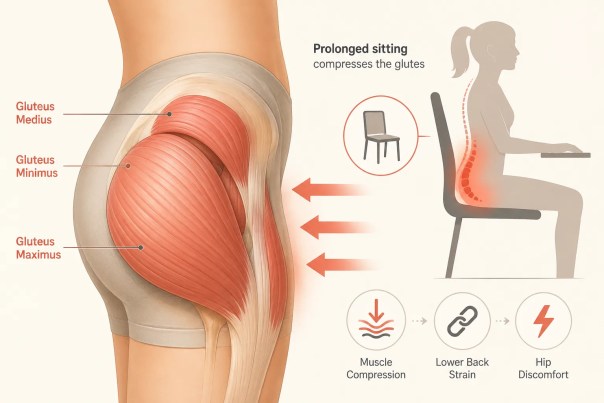
The gluteal muscles tighten with age primarily because of prolonged sitting and decreased daily activity, which cause the muscle fibers to shorten and lose flexibility. When you sit for extended periods, the glutes remain in a compressed, shortened position for hours at a time, and over months and years, they adapt to this position as their new normal length.
Beyond sitting, several age-related factors contribute to glute tightness:
- Reduced overall movement: Walking less, climbing fewer stairs, and avoiding activities that require hip extension all allow the glutes to weaken and tighten
- Muscle fiber changes: After age 50, muscle tissue naturally loses some elasticity and becomes stiffer if not regularly stretched
- Compensation patterns: When other muscles weaken (like the core or hip flexors), the glutes often tighten to compensate for instability
- Inflammation: Low-grade inflammation in joints and connective tissue becomes more common with age, contributing to stiffness
The glutes consist of three muscles (gluteus maximus, medius, and minimus) that work together to extend the hip, stabilize the pelvis, and support upright posture. When these muscles tighten, they pull on the pelvis and lower spine, creating a chain reaction of discomfort throughout the lower body.
Can Tight Glutes Cause Back Pain in Older Adults
Yes, tight glutes directly cause lower back pain in older adults by altering pelvic alignment and forcing the lower back muscles to work harder during everyday movements. When the gluteal muscles are tight and weak, they cannot properly stabilize the pelvis, so the lumbar spine compensates by taking on extra load during activities like standing, walking, or bending.
The connection works like this: tight glutes pull the pelvis into a posterior tilt (tucking under), which flattens the natural curve of the lower back. This position strains the lumbar discs, facet joints, and surrounding muscles. Additionally, when glutes don’t fire properly during hip extension, the lower back muscles overwork to complete movements that should primarily use the hips.
Research shows that addressing glute tightness and weakness often reduces chronic lower back pain without other interventions. Many seniors who stretch their glutes regularly report significant decreases in daily back discomfort within a few weeks.
Can Glute Stretches Help With Hip Pain
Glute stretches effectively reduce hip pain in seniors by releasing tension in muscles that directly attach to or cross the hip joint. The gluteus medius and minimus, in particular, attach to the outer hip and can cause pain that feels like it’s coming from the hip joint itself when they’re tight or contain trigger points.
Hip pain from tight glutes typically presents as:
- Deep aching in the outer hip or buttock
- Pain when lying on the affected side
- Discomfort when standing from a seated position
- Stiffness when walking after sitting
- Limited range of motion when lifting the leg to the side
Stretching releases this tension and restores normal muscle length, which reduces the pulling force on the hip structures. For many seniors, what feels like hip arthritis pain is actually muscular tightness that responds well to consistent stretching. However, if hip pain persists despite regular stretching, or if it’s accompanied by grinding, clicking, or severe limitation, evaluation by a healthcare provider is necessary to rule out joint problems.
For additional ways to maintain hip and leg function, see our guide to leg strengthening exercises for seniors.
Best Glute Stretches For Seniors With Limited Mobility
Seniors with limited mobility can effectively stretch their glutes using chair-based and bed-based positions that don’t require getting down on the floor. These modifications provide the same muscle release as traditional stretches while accommodating balance concerns, joint limitations, or difficulty transitioning to and from the floor.
Seated Figure-4 Stretch
Sit in a sturdy chair with feet flat on the floor. Place your right ankle on your left knee, creating a “4” shape with your legs. Gently press down on your right knee while keeping your back straight. Lean forward slightly from the hips (not the waist) until you feel a stretch in your right glute. Hold for 20-30 seconds, then switch sides.
Modification: If you cannot reach your ankle, place your foot on a low stool instead of your opposite knee.
Seated Knee-to-Chest
While seated, lift your right knee toward your chest and hold it with both hands behind the thigh (not on top of the knee). Pull gently until you feel a stretch in your right glute and lower back. Hold for 20-30 seconds, then switch sides.
Modification: Use a resistance band or towel looped around your thigh if you cannot comfortably reach with your hands.
Supine Glute Stretch (Bed Version)
Lie on your back in bed with knees bent and feet flat. Cross your right ankle over your left knee. Thread your hands through the opening and clasp behind your left thigh. Pull your left thigh toward your chest until you feel a stretch in your right glute. Hold for 20-30 seconds, then switch sides.
This stretch works identically whether performed in bed or on a yoga mat, making it accessible for those who can lie down but struggle with floor transitions.
For more seated exercise options that complement glute stretching, explore our seated chair exercises for seniors.

Glute Stretches Seniors Can Do Sitting Down
Seated glute stretches provide effective muscle release while maintaining stability and safety in a chair. These stretches work well for seniors who spend significant time sitting or who need to stretch during breaks from desk work or television watching.
Seated Piriformis Stretch: Sit with your right ankle crossed over your left knee. Place your right hand on your right knee and gently press it toward the floor while keeping your back straight. You should feel the stretch deep in your right glute. Hold for 20-30 seconds and repeat on the other side.
Seated Spinal Twist with Glute Stretch: Sit sideways in a chair with your right hip against the backrest. Twist your torso to the right and hold the back of the chair with both hands. This position stretches the left glute and lower back. Hold for 20-30 seconds, then switch sides.
Seated Hip Hike: While sitting, lift your right hip up toward your ribs (as if shortening that side of your body), then lower it back down. This movement stretches and activates the glutes alternately. Perform 10-12 repetitions on each side.
These seated variations can be performed multiple times throughout the day without changing clothes or using equipment, making them practical for daily use.
Glute Stretches For Seniors After Sitting All Day
After prolonged sitting, specific glute stretches help reverse the shortened position and restore normal muscle length. These stretches target the compression and tightness that accumulates during extended periods in a chair.
Standing Glute Stretch: Stand facing a counter or sturdy table. Place your right ankle on the surface (knee bent), creating a figure-4 position while standing. Keep your standing leg straight and lean forward from your hips until you feel a stretch in your right glute. Hold for 20-30 seconds, then switch sides.
Doorway Hip Flexor and Glute Stretch: Stand in a doorway with your right foot forward and left foot back in a lunge position. Tuck your pelvis under (posterior tilt) and squeeze your left glute while keeping your left knee straight. This stretches the hip flexor while activating the glute. Hold for 20-30 seconds, then switch sides.
Supine Knee Rocks: Lie on your back with knees bent and feet flat. Let both knees fall to the right side while keeping your shoulders on the floor. Hold for 20-30 seconds, feeling the stretch in your left glute and lower back. Return to center and repeat on the other side.
Perform this sequence after long periods of sitting (such as after meals, long car rides, or work sessions) to prevent the accumulation of tightness. Consistency matters more than duration, three 30-second stretches spread throughout the day work better than one long session.
For a complete approach to staying active throughout the day, see our daily activities for seniors guide.
How Often Should Seniors Stretch Their Glutes
Seniors should stretch their glutes 3-5 times per week for maintenance, or daily if experiencing tightness, pain, or limited mobility. Each stretching session should include 2-3 different glute stretches, held for 20-30 seconds each, and repeated 2-3 times per side.
Frequency guidelines based on goals:
- Maintenance (no current pain): 3 times per week, 2-3 stretches per session
- Addressing tightness: 5-6 times per week, 3-4 stretches per session
- Managing pain: Daily, 4-5 stretches per session, potentially twice per day
The best times to stretch are after light activity when muscles are warm, such as after a walk, after a warm shower, or following gentle exercises for seniors. Avoid aggressive stretching first thing in the morning when muscles are stiffest and cold.
Consistency produces better results than intensity. Gentle, regular stretching gradually lengthens muscle fibers and resets their resting length, while aggressive stretching can cause muscle guarding and actually increase tightness.
How Long Does It Take to Loosen Tight Glutes
Most seniors notice initial improvement in glute tightness within 2-3 weeks of consistent stretching, with significant changes occurring after 4-6 weeks of regular practice. The timeline depends on the severity of tightness, frequency of stretching, and whether you address contributing factors like prolonged sitting.
Typical progression:
- Week 1-2: Improved awareness of tightness; stretches may feel uncomfortable but should not cause pain
- Week 3-4: Noticeable increase in range of motion; reduced stiffness when standing from sitting
- Week 5-8: Measurable improvement in flexibility; decreased back or hip pain; easier movement during daily activities
- Week 9+: Maintenance phase; continued improvement if stretching continues
Factors that speed up progress include combining stretching with strengthening exercises, reducing sitting time, staying hydrated, and maintaining consistency. Factors that slow progress include inconsistent stretching, continuing to sit for long periods without breaks, and stretching too aggressively (which causes muscle guarding).
If you see no improvement after 4-6 weeks of consistent daily stretching, consult a physical therapist to assess whether other factors (such as joint problems, nerve issues, or compensation patterns) are preventing progress.

Glute Stretches For Seniors With Arthritis
Seniors with arthritis can safely stretch their glutes by using modified positions that avoid deep hip flexion and by working within a comfortable range of motion. Arthritis in the hips, knees, or lower back requires adjustments to standard stretches, but the benefits of maintaining glute flexibility remain important for managing pain and preserving function.
Modified stretches for arthritis:
Gentle Supine Knee-to-Chest: Lie on your back and bring one knee toward your chest only as far as comfortable, using your hands to support behind the thigh (never pulling on the knee joint itself). Hold for 15-20 seconds. This stretch is gentler than the figure-4 variation and puts less stress on the hip joint.
Seated Glute Stretch with Towel: Sit in a chair and place your right foot on a low stool. Loop a towel or resistance band around your right thigh and gently pull it toward you while keeping your back straight. This provides the stretch without requiring deep hip flexion. Hold for 20-30 seconds per side.
Standing Glute Stretch at Counter: Place your right foot on a low step or stool (6-8 inches high) in front of you. Keep your knee slightly bent and lean forward from your hips just until you feel a gentle stretch. This modification reduces the hip flexion angle compared to placing the foot on a higher surface.
Guidelines for arthritis-safe stretching:
- Warm up the area first with gentle movement or a warm compress
- Never force a stretch into pain, work at 60-70% of maximum stretch
- Hold stretches for shorter durations (15-20 seconds) initially
- Avoid stretches that cause joint pain during or after the stretch
- Focus on consistency over intensity
If a particular stretch consistently aggravates arthritis symptoms, skip it and focus on the variations that feel manageable. The goal is to maintain available range of motion, not to achieve maximum flexibility.
For additional arthritis-friendly movement options, see our guide to yoga for senior beginners.
Difference Between Static and Dynamic Glute Stretches For Seniors
Static stretches involve holding a position without movement for 20-30 seconds and work best for seniors because they safely lengthen tight muscles without requiring balance or coordination. Dynamic stretches involve controlled movement through a range of motion and are better used as warm-ups before activity rather than for releasing chronic tightness.
Static glute stretches (recommended for most seniors):
- Figure-4 stretch (seated or supine)
- Knee-to-chest stretch
- Piriformis stretch
- Held for 20-30 seconds, repeated 2-3 times per side
- Best performed after light activity when muscles are warm
- Ideal for addressing tightness and improving flexibility
Dynamic glute stretches (use as warm-ups):
- Leg swings (forward and back, side to side)
- Walking lunges with a twist
- Hip circles
- Performed for 8-12 repetitions per side
- Best used before walking, exercise, or physical activity
- Prepare muscles for movement rather than lengthening them
For seniors dealing with tightness, pain, or limited mobility, static stretches should be the primary focus. They’re safer, easier to perform correctly, and more effective for releasing chronic muscle tension. Dynamic stretches can be added once basic flexibility is restored and if you’re preparing for more vigorous activity like balance exercises or walking.
Glute Stretches Seniors Should Avoid
Seniors should avoid glute stretches that require extreme hip flexion, deep squatting, or positions that compromise balance or put excessive stress on the knees and lower back. Some traditional stretches carry unnecessary risk for older adults, especially those with joint issues, balance concerns, or limited flexibility.
Stretches to avoid or modify:
Deep Pigeon Pose: This yoga stretch requires lying face-down with one leg bent underneath the body at an extreme angle. It places significant stress on the knee and hip joint and is difficult to exit safely. Use the seated figure-4 stretch instead, which provides the same muscle release without the joint stress or floor transition.
Standing Figure-4 (unsupported): Balancing on one leg while pulling the other knee toward the chest creates a high fall risk. Always perform this stretch while holding a counter, wall, or sturdy chair for support, or use the seated version instead.
Hurdler Stretch: Sitting on the floor with one leg extended and the other bent back behind the body (like a hurdler position) puts extreme stress on the bent knee and is difficult to get into and out of safely. This stretch offers no advantages over safer alternatives.
Aggressive Bouncing Stretches: Any stretch that involves bouncing or pulsing movements can trigger the muscle’s protective reflex, causing it to tighten rather than lengthen. This approach also increases injury risk. Always stretch smoothly and hold positions steadily.
Warning signs a stretch is inappropriate:
- Sharp pain in the joint (different from muscle stretch sensation)
- Inability to breathe normally while holding the position
- Tingling, numbness, or radiating pain
- Feeling unstable or at risk of falling
- Inability to exit the position easily
When in doubt, choose the simplest, most supported version of a stretch. Seated and supine positions are almost always safer than standing or floor-based stretches for seniors.
Glute Stretches That Don’t Require Getting on the Floor
Seniors who cannot get down on the floor or who have difficulty transitioning from floor to standing can effectively stretch their glutes using bed-based and chair-based positions. These alternatives provide equivalent muscle release without the physical challenge of floor transitions.
Bed-based stretches:
Supine Figure-4 on Bed: Lie on your back in bed with knees bent. Cross your right ankle over your left knee and thread your hands through to clasp behind your left thigh. Pull your left thigh toward your chest. This works identically to the floor version but eliminates the need to get up from the floor.
Side-lying Glute Stretch: Lie on your left side in bed with knees bent. Pull your right knee toward your chest while keeping your left leg stationary. This stretches the right glute and is particularly comfortable for those with back issues.
Chair-based stretches:
Seated Figure-4: Described earlier, this is the most versatile no-floor glute stretch. Can be performed in any sturdy chair throughout the day.
Standing Counter Stretch: Stand facing a counter and place your right foot on the counter surface (or on a chair seat if the counter is too high). Lean forward from your hips until you feel a stretch in your right glute. This stretch is accessible for those who can stand but cannot get on the floor.
Bed Edge Stretch: Sit on the edge of your bed with your right ankle crossed over your left knee. Lean forward from your hips while keeping your back straight. The softer surface of the bed makes this more comfortable than a hard chair for some people.
These modifications ensure that mobility limitations don’t prevent you from maintaining glute flexibility. Choose the positions that feel most stable and comfortable for your body.
For more ways to stay active without floor work, explore our standing exercises for seniors.
Do Seniors Need Different Stretches Than Younger People
Seniors need the same basic glute stretches as younger people but should use modified positions that accommodate reduced flexibility, balance concerns, and joint sensitivity. The muscle anatomy and stretching principles remain the same across age groups, but the execution and precautions differ.
Key differences for seniors:
- Position modifications: Prefer seated and supine positions over standing or deep floor positions
- Reduced intensity: Work at 60-80% of maximum stretch rather than pushing to the limit
- Longer warm-up: Spend more time warming muscles before stretching (light movement or warmth)
- More support: Use chairs, walls, counters, or props for stability during stretches
- Shorter hold times initially: Start with 15-20 seconds if new to stretching, gradually working up to 30 seconds
- Greater focus on consistency: Regular, gentle stretching produces better results than occasional aggressive stretching
The stretches themselves, figure-4, knee-to-chest, piriformis stretch, work for all ages. What changes is how you perform them. A 30-year-old might do a figure-4 stretch on the floor without support, while a 70-year-old does the same stretch seated in a chair. Both achieve the same muscle release; the older version simply includes more practical support and safety measures.
Seniors should also pay more attention to how stretches feel during and after. Joint pain (as opposed to muscle stretch sensation) is a signal to modify the position, not push through it. This awareness becomes more important with age as joint changes become more common.
Conclusion
Glute stretches for seniors address a common source of discomfort and limited mobility that develops from prolonged sitting and reduced activity. Tight gluteal muscles contribute to lower back pain, hip stiffness, and difficulty with everyday movements like standing from chairs and walking. Regular stretching, performed 3-5 times per week using seated, standing, or bed-based positions, can produce noticeable improvement within 2-4 weeks.
The most effective approach combines several stretches (figure-4, knee-to-chest, and seated variations) held for 20-30 seconds each, performed when muscles are warm. Seniors with arthritis, balance concerns, or limited mobility should focus on modified positions that provide support and avoid deep joint flexion. Static stretches work better than dynamic movements for releasing chronic tightness.
Next steps:
- Choose 2-3 glute stretches from this guide that match your current mobility level
- Perform them 3 times this week after light activity or a warm shower
- Hold each stretch for 20-30 seconds without forcing or bouncing
- Notice how your back, hips, and movement feel after two weeks of consistent practice
- Add more stretches or increase frequency if you want faster progress
Consistency matters more than intensity. Even five minutes of gentle stretching several times per week can restore comfort and function to tight glutes, making daily activities easier and more comfortable. For a complete approach to staying mobile and active, combine glute stretching with the simple mobility exercises and healthy habits that support long-term function.
References
[2] Glute Exercises For Seniors The Best Moves To Try And Why Theyre So Good For You – https://www.agebold.com/resources/glute-exercises-for-seniors-the-best-moves-to-try-and-why-theyre-so-good-for-you
[5] At Home Exercises Stretches For Your Glutes – https://shelteringarmsinstitute.com/rehablogs/at-home-exercises-stretches-for-your-glutes/
[7] Stretches For Tight Glutes – https://www.goodrx.com/well-being/movement-exercise/stretches-for-tight-glutes
This article is part of our Stretching & Flexibility Exercises for Seniors series.


